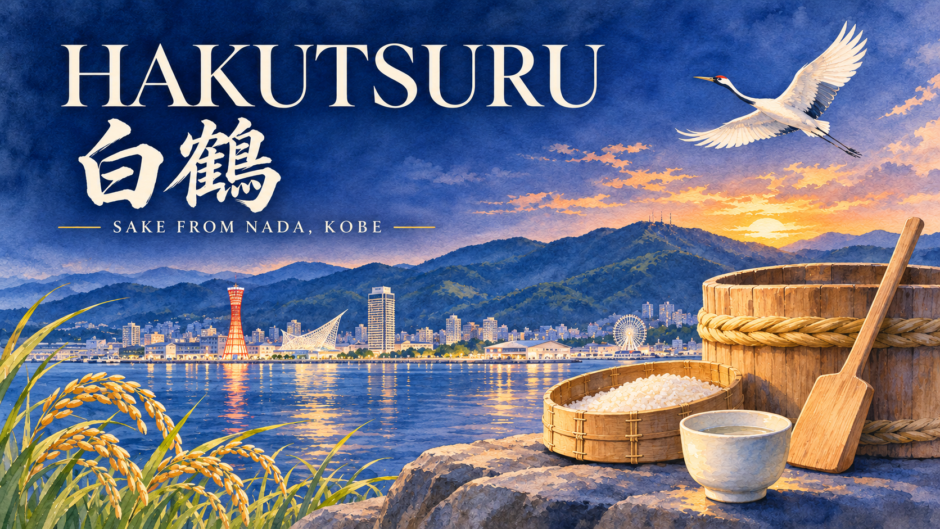

Hakutsuru (白鶴) is a Japanese sake producer from Nada, Kobe, in Hyogo Prefecture. Its name means “white crane,” and its range shows how different bottles from one brewery can be: a clear junmai ginjo and a creamy-looking nigori are very different starting points. This guide introduces the brewery through Superior Junmai Ginjo and Sayuri Nigori.
Hakutsuru at a glance
| Japanese name | 白鶴 — Hakutsuru |
|---|---|
| Producer | Hakutsuru Sake Brewing Co., Ltd. |
| Home | Nada, Kobe, Hyogo Prefecture |
| Brewing began | 1743 |
| Name adopted | 1747 |
| Two ways to explore | Superior Junmai Ginjo; Sayuri Junmai Nigori |
The Nada connection
Hakutsuru’s official history traces its beginnings to Jihei Kano, who started brewing in 1743. The name Hakutsuru followed in 1747. The brewery connects its identity to Nada’s rice, water and brewing traditions, including spring water from the Rokko Mountains.
Place is part of the story, but it does not make all the brewery’s products interchangeable. Choosing a Hakutsuru bottle starts with the smaller words beneath the brand name: junmai ginjo, junmai daiginjo or nigori, for example.
Superior Junmai Ginjo: the clear blue-bottle option
In the US-market lineup, Superior Junmai Ginjo is the frosted blue bottle. The producer describes fruity aromas with gentle sweetness, acidity and rice notes. It recommends chilled serving and pairings such as seafood and grilled vegetables.
| Style | Junmai Ginjo |
|---|---|
| Origin | Japan; Hyogo |
| Alcohol | 14.6% |
| Rice-polishing ratio | 60% |
| Listed sizes | 720 ml and 300 ml |
These specifications belong to this product listing, rather than to Hakutsuru as a whole. A different bottle in another market can have different wording, packaging or specifications.
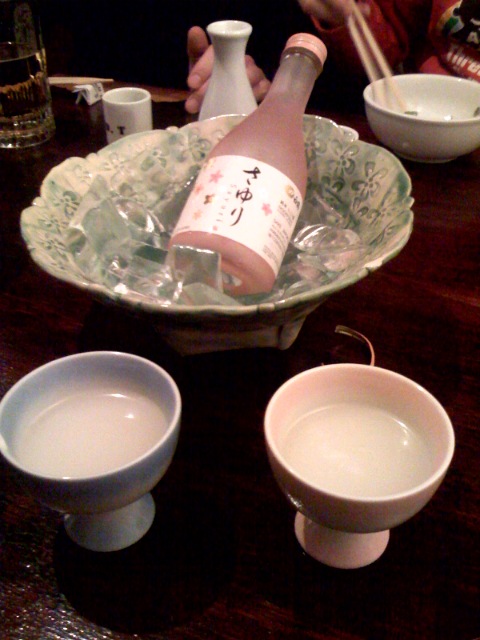
Sayuri Nigori: a different texture
Sayuri is the pink-bottle junmai nigori in the same international range. Its cloudy appearance comes from rice sediment remaining after coarse filtration. The producer describes a creamy texture and light sweetness, and lists 12.5% alcohol, a 70% rice-polishing ratio and Japanese origin.
Hakutsuru recommends serving Sayuri slightly chilled, around 5–10°C, and gently inverting the bottle before serving to mix the sediment. Suggested matches include spicy dishes and desserts. Its official FAQ advises refrigeration after opening and enjoyment within a week for best flavor and texture.
Which should you choose?
Consider Superior Junmai Ginjo if you want to explore a clear sake with a lighter visual texture alongside seafood or vegetables. Consider Sayuri if the idea of cloudy sake, a softer texture and a sweeter impression appeals to you. Those are different preferences, rather than steps on a quality ladder.
A useful first tasting is to compare a small pour of each, served according to the producer’s guidance. Notice appearance, aroma, texture and finish separately. That makes the comparison more informative than deciding whether one simply tastes “more like sake.”
Reading the label
Look for 白鶴 to identify the brand, then check the full product name. Junmai Ginjo and Junmai Nigori describe different aspects of the sake, so a shared crane emblem does not imply a shared recipe. When buying outside Japan, use the local official listing and your bottle’s label to confirm size, alcohol and storage instructions.
Explore more Japanese sake
Continue with our guides to Hakkaisan (八海山), Dassai (獺祭) and Shinkame (神亀).
Sources and further reading
- Hakutsuru — history and Nada brewing background
- Hakutsuru — Superior Junmai Ginjo
- Hakutsuru — Sayuri specifications, serving and storage
Information checked November 6, 2026. Specifications and availability can change; check the label on the bottle you buy. Flavor descriptions are attributed to their sources, rather than based on a tasting conducted for this article.

[…] more brewery stories, explore Hakutsuru (白鶴) in Nada, Gekkeikan (月桂冠) in Kyoto, and Denshu (田酒) in […]
[…] more brewery stories, explore Hakutsuru (白鶴) in Nada, Gekkeikan (月桂冠) in Kyoto, and Denshu (田酒) in […]