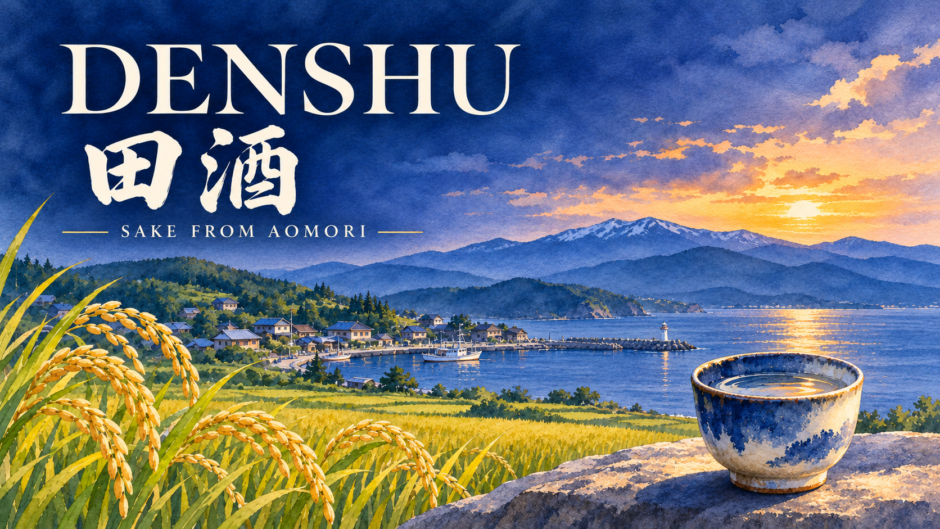

Denshu (田酒) is a sake brand from Nishida Shuzoten in Aomori, northern Japan. Its name points directly to the rice field, and its story centers on making junmai sake that expresses the flavor of rice. For a first look at the brand, start with Tokubetsu Junmai (特別純米酒), a year-round product in the brewery’s official lineup.
Denshu at a glance
| Name | Denshu — 田酒 |
|---|---|
| Brewery | Nishida Shuzoten — 西田酒造店 |
| Location | Aburakawa, Aomori City, Aomori Prefecture |
| Brewery founded | 1878 |
| Denshu launched | October 1, 1974 |
| Starting point | Tokubetsu Junmai, made with Hana Fubuki rice |
Why the name matters
The first character, 田, means a rice field. Nishida Shuzoten explains that Denshu is made without added brewing alcohol or brewing sugars, reflecting its rice-centered philosophy. That makes the name more than a decorative label: it is a compact statement of what the brewery wanted this brand to represent.
The company began developing its handmade junmai sake in 1970 and released Denshu in 1974. The brewery itself is older, dating to 1878. Separating those dates helps explain the story: Denshu was a new direction for an established producer, rather than the name of a brewery founded in the 1970s.
Tokubetsu Junmai: the bottle to understand first
The official product page describes the standard Tokubetsu Junmai as flavorful and full enough to show rice character, while retaining a clean finish. It uses Hana Fubuki (華吹雪), a sake rice associated with Aomori. These are the brewery’s descriptions, rather than independent tasting results.
| Category | Tokubetsu Junmai |
|---|---|
| Rice | Hana Fubuki (華吹雪) |
| Rice-polishing ratio | 55% remaining |
| Alcohol | 15.5% |
| Sake meter value | ±0 |
| Acidity | 1.5 |
| Availability in the official lineup | Year-round |
A 55% rice-polishing ratio means 55% of the original grain remains. It describes a production choice, rather than a score out of 100. Likewise, a sake meter value near zero is not a complete prediction of sweetness: acidity, alcohol, texture and serving temperature also shape the experience.
Other Denshu expressions
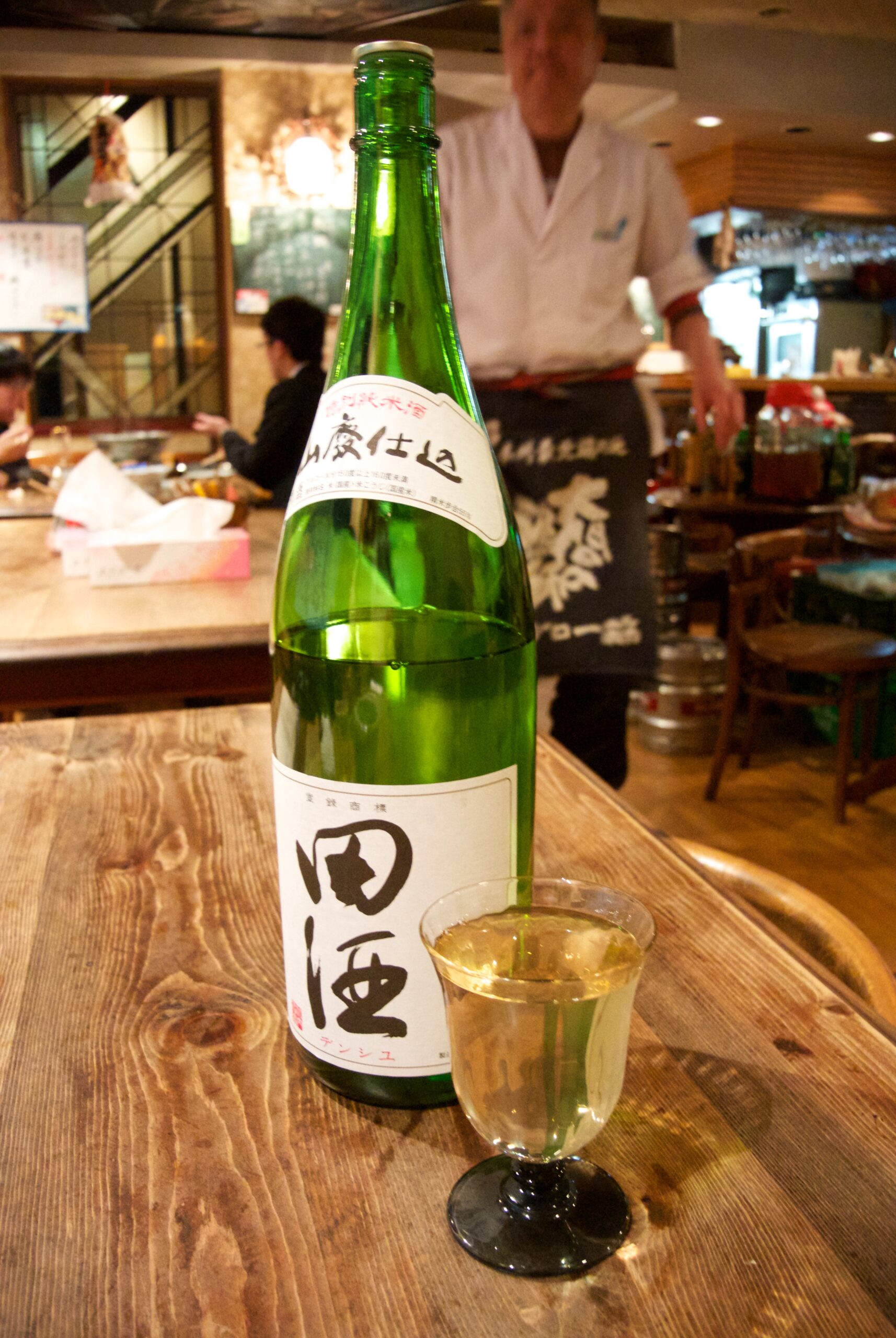
The lineup also includes a Yamahai Tokubetsu Junmai and several junmai daiginjo expressions. The brewery lists the yamahai bottling separately from the standard Tokubetsu Junmai, with its own acidity and seasonal release schedule. Do not assume that a bottle carrying 山廃仕込 has the same profile as the year-round product.
Rice names are another useful clue. The producer’s range includes products using Yamada Nishiki and Hana Omoi as well as Hana Fubuki. Match the full product name, category and rice variety before comparing bottles or prices.
How to buy and enjoy it
For an uncomplicated introduction, look for 田酒 特別純米酒 and ask the retailer to confirm that it is the standard expression. Choose a smaller bottle if you want to explore the brand before committing to a larger format. Follow the bottle’s storage directions, especially when buying a seasonal or unpasteurized release.
As an editorial serving idea, try a small chilled pour with a simple meal, then let the glass warm slightly and notice whether the rice character becomes more apparent. This is an exploration method, not a claim that one temperature is best for every Denshu bottling.
Explore more Japanese sake
Continue with our guides to Hakkaisan (八海山), Dassai (獺祭) and Shinkame (神亀).
Sources and further reading
- Nishida Shuzoten — brewery introduction
- Nishida Shuzoten — brand origins
- Nishida Shuzoten — product lineup and specifications
Information checked November 6, 2026. Specifications and availability can change; check the label on the bottle you buy. Flavor descriptions are attributed to their sources, rather than based on a tasting conducted for this article.