
Ozeki (大関) is a sake producer based in Nishinomiya, Hyogo. Its One Cup Ozeki (ワンカップ大関) offers a particularly memorable introduction: a small glass container that is both the package and the drinking vessel. Launched in 1964, it is a story about sake design as much as sake flavor.
Ozeki and One Cup at a glance
| Producer / brand | Ozeki — 大関 |
|---|---|
| Home | Nishinomiya, Hyogo Prefecture |
| Brewing roots | 1711 |
| Product family | One Cup Ozeki — ワンカップ大関 |
| One Cup launch | 1964 |
| Classic glass size | 180 ml |
| Important distinction | One Cup is Ozeki’s registered trademark; not every cup sake is an Ozeki product |
Why put sake in a glass cup?
Ozeki’s own development story starts with a practical observation: sake served from a ceramic flask often concealed the maker’s identity. The company wanted a recognizable package that could also serve as the drinking cup.
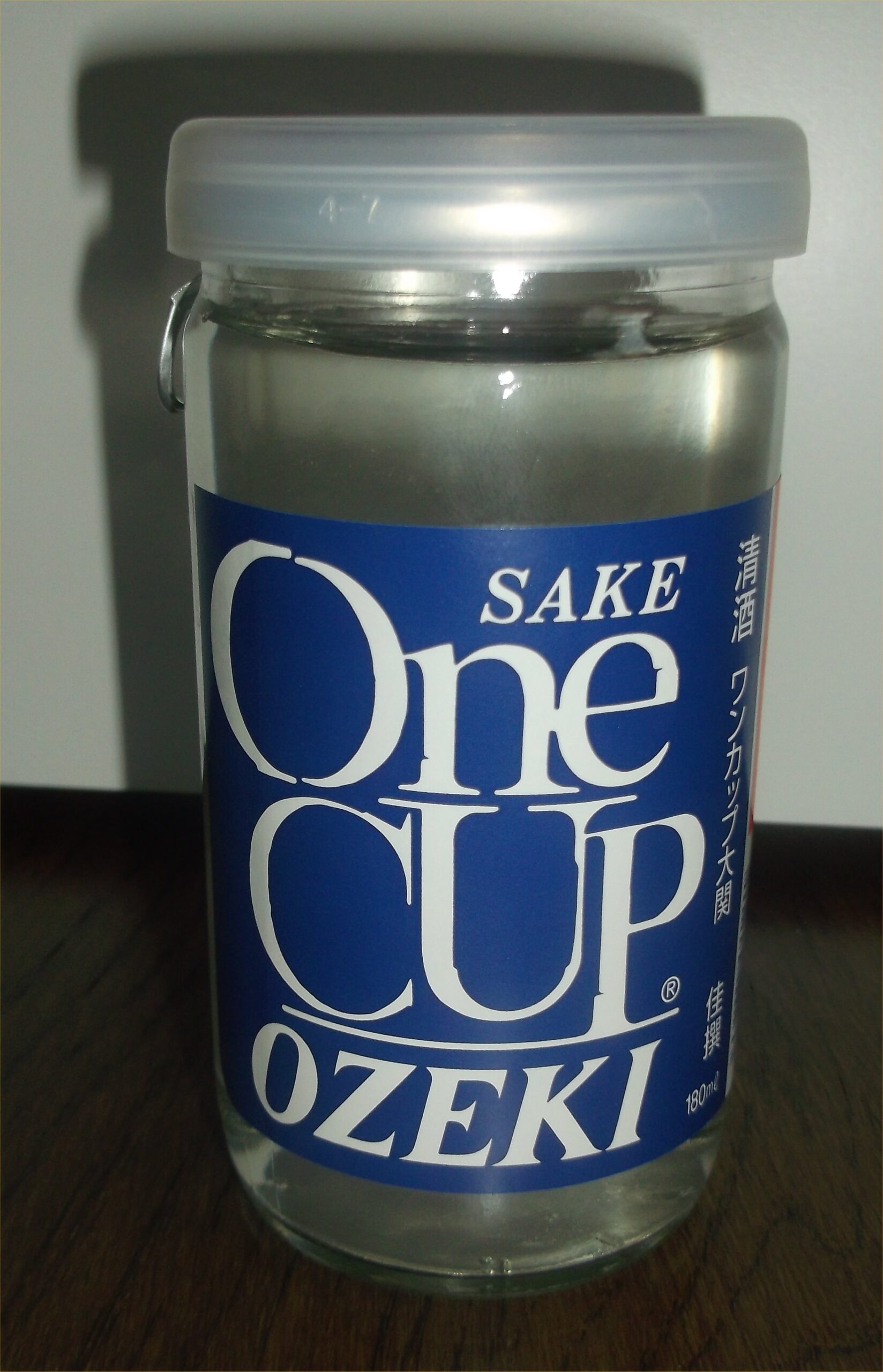
The solution combined a wide-mouthed glass container, an easy-opening lid and a compact 180 ml format. Its blue label and Roman-letter branding also stood apart from many contemporary sake labels. The result was a product whose packaging became an important part of its identity.
One Cup launched in 1964. Knowing that history makes the small container easier to appreciate: it represents a deliberate change in how sake could be presented, rather than simply a large bottle made smaller.
Kasen One Cup: one specific expression
The photograph above shows an earlier Kasen (佳撰) One Cup. The current official listing describes Kasen as an accessible, balanced sake and provides the following specifications. These belong to Kasen, not to every member of the One Cup family.
| Japanese name | 佳撰 ワンカップ |
|---|---|
| Category | Futsushu — ordinary sake |
| Volume | 180 ml |
| Alcohol | 15% |
| Sake meter value | ±0 |
| Acidity | 1.3 |
| Ingredients listed | Japanese rice, rice koji and brewing alcohol |
“Ordinary sake” is the category translation, not an instruction about whether you should enjoy it. A product’s category is one useful fact among others, alongside aroma, texture, serving temperature and the meal you have in mind.
Kasen and Josen are different products
The lineup also includes Josen Kinkan One Cup (上撰 金冠 ワンカップ). Its official Japanese page lists 180 ml and 15% alcohol, with acidity of 1.4. The producer describes a clean, balanced style.
Small differences in wording can therefore matter. Check 佳撰 or 上撰, the full product name and the local label before comparing specifications. Ozeki also lists other One Cup expressions, so the container shape alone does not tell you the sake category inside.
How to explore it
For a first look, identify the exact cup you have, read its serving instructions and try a small pour in a separate tasting glass if you want to examine the aroma. Using another glass is optional; the original design was intended to work as its own drinking vessel.
As an editorial comparison, place it alongside a junmai ginjo from another guide and note the differences in aroma, body and finish. Keep the comparison about your preferences rather than assuming a compact package predicts the flavor.
Buying outside Japan
Match both OZEKI and 大関, then confirm the product name, volume and country-of-origin statement on the bottle sold in your market. A Japanese brand name is not a substitute for checking an individual product’s manufacturing information. Prices also vary by country, retailer and expression, so compare like for like.
Keep exploring Japanese sake
For more brewery stories, explore Hakutsuru (白鶴) in Nada, Gekkeikan (月桂冠) in Kyoto, and Denshu (田酒) in Aomori.
Sources and further reading
- Ozeki — the One Cup design and development story
- Ozeki — Kasen One Cup specifications
- Ozeki — Josen Kinkan One Cup specifications
- Hyogo Sake Brewers Association — Nada brewery profiles and Ozeki origins
Information checked November 6, 2026. Specifications, prices and availability can change. Flavor descriptions are attributed to the producer rather than based on a tasting conducted for this article.