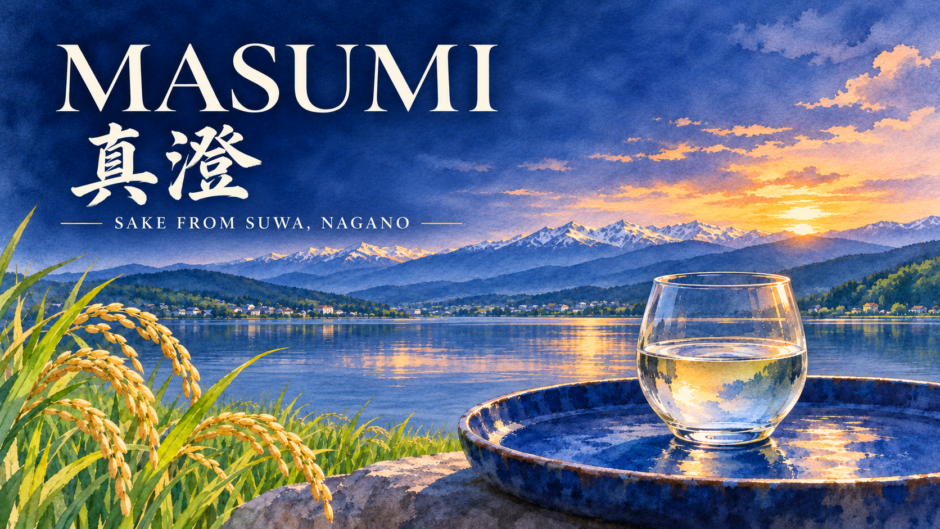

Masumi (真澄) is the sake brand of Miyasaka Brewing Company in Suwa, Nagano. Its story brings together an alpine setting, a family brewing history dating to 1662 and a close connection to Brewing Association Yeast No. 7. For an approachable first bottle, this guide focuses on SHIRO (白妙), a 12% alcohol junmai ginjo.
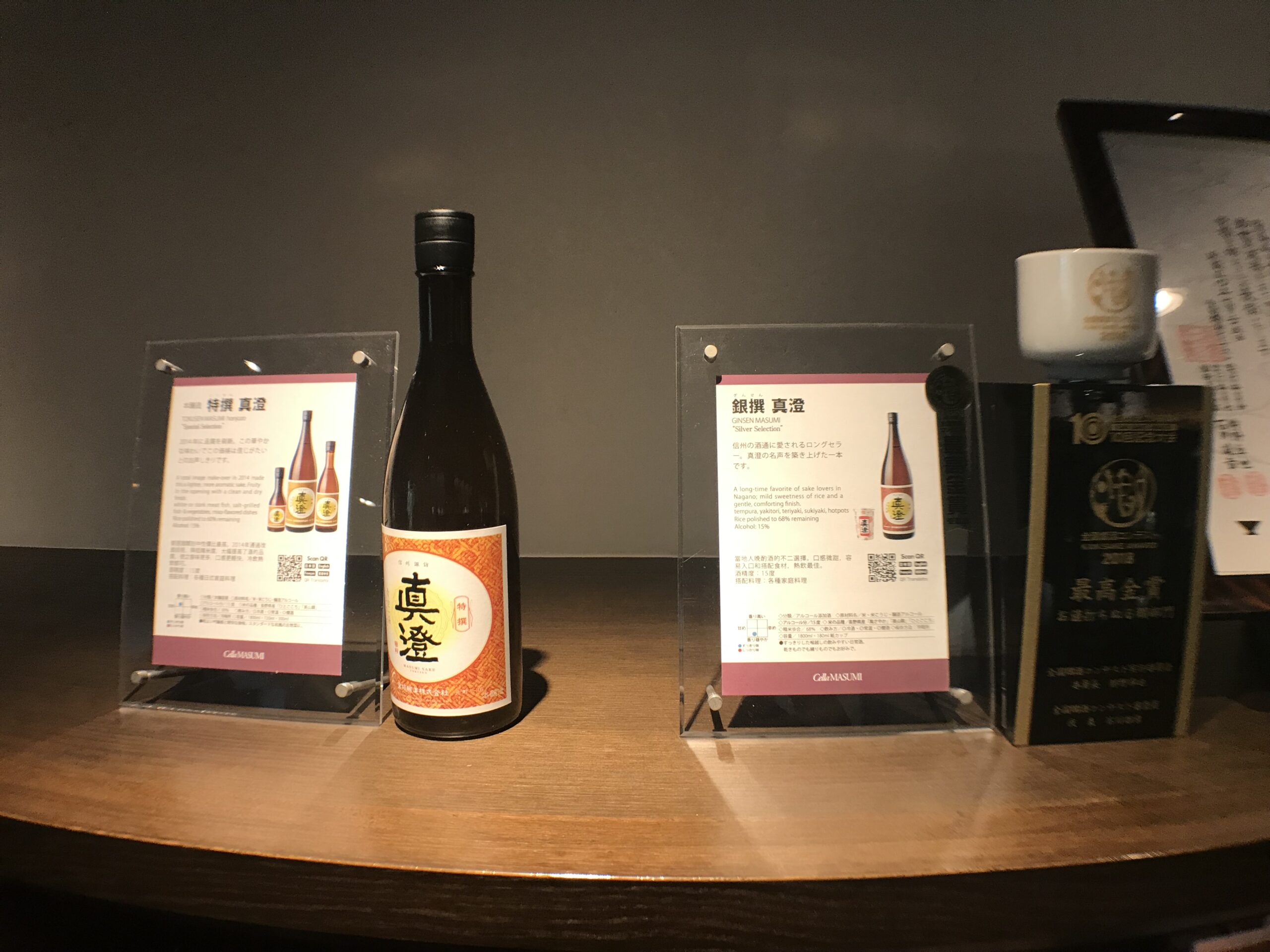
Masumi at a glance
| Japanese name | 真澄 — Masumi |
|---|---|
| Producer | Miyasaka Brewing Company, Ltd. |
| Home | Suwa, Nagano Prefecture |
| Brewing history | Established by 1662 |
| A defining connection | Brewing Association Yeast No. 7 |
| Bottle explored here | SHIRO / 白妙, Junmai Ginjo |
From Suwa’s mountains to the fermentation tank
Masumi’s surroundings are more than a scenic backdrop. The brewery says its Suwa brewing water comes from the Kirigamine Highlands, while its Fujimi brewery draws water associated with Mount Nyukasa in the Southern Japan Alps. It describes these waters as low in minerals.
The brand’s history is tied to the Miyasaka family, whose brewery was established by 1662. A particularly influential chapter came in 1946, when scientist Shoichi Yamada identified an excellent yeast in Masumi’s fermentation tanks. That yeast became known as Brewing Association Yeast No. 7.
Yeast converts sugars into alcohol during fermentation and also helps shape aroma. Masumi’s more recent work has returned to its own strains descended from No. 7. This makes yeast a useful thread for understanding the brand, rather than treating sake as simply rice plus water.
SHIRO: a lighter-alcohol starting point
The producer presents SHIRO as a light-bodied expression with gentle fruit aromas, sweetness, acidity and savory depth. At 12% alcohol, it offers a different starting point from higher-strength bottles. That alcohol figure belongs to SHIRO, not to every Masumi sake.
| Category | Junmai Ginjo |
|---|---|
| Alcohol | 12% |
| Rice-polishing ratio | 55% remaining |
| Yeast | Masumi No. 7 |
| Rice listed | Miyama Nishiki from Nagano; Yamada Nishiki from Hyogo |
| Availability | Year-round |
| Producer’s serving guidance | Best chilled; also suitable warm |
“55% remaining” means 55% of the original grain remains after polishing. It is not a sweetness rating or a promise that this bottle will taste better than a sake with a different polishing ratio.
Food and serving ideas
Masumi’s official pairing suggestions include fresh greens, citrus-accented salads, grilled shrimp or chicken, and dairy or cheese dishes. Start chilled if you want to follow the producer’s preferred serving suggestion. A small tasting glass lets you notice how aroma and texture change as the sake gradually warms.
As an editorial comparison exercise, try the same modest pour with a plain dish and then with a citrus dressing or richer topping. Notice whether the sake’s acidity, sweetness or savory finish becomes more apparent. This is a way to explore your own preferences, rather than a reported tasting result.
Choosing another Masumi
Masumi’s range includes other flagship expressions, classic labels, seasonal releases and sparkling sake. Read the full name and category before buying: a seasonal nama genshu and a bottle-fermented sparkling sake are different products from SHIRO, even when they share the 真澄 name.
For your first purchase, match the English name SHIRO and Japanese name 白妙, then check the local bottle’s alcohol, size and storage directions. If you are comparing prices, compare the same product and volume rather than the brand name alone.
Keep exploring Japanese sake
For more brewery stories, explore Hakutsuru (白鶴) in Nada, Gekkeikan (月桂冠) in Kyoto, and Denshu (田酒) in Aomori.
Sources and further reading
- Masumi — SHIRO specifications and pairings
- Masumi — brewing history
- Masumi — water, rice and yeast
- Masumi — product range
Information checked November 6, 2026. Specifications, prices and availability can change. Flavor descriptions are attributed to the producer rather than based on a tasting conducted for this article.


[…] these stories with Masumi (真澄) and its No. 7 yeast heritage, Kiku-Masamune (菊正宗) and cedar-scented taru sake, or Shinkame […]
[…] these stories with Masumi (真澄) and its No. 7 yeast heritage, Kiku-Masamune (菊正宗) and cedar-scented taru sake, or Shinkame […]
[…] with Masumi (真澄) and its No. 7 yeast heritage, Kikuhime (菊姫) and yamahai, or Shichiken (七賢) and sparkling […]
[…] with Masumi (真澄) and its No. 7 yeast heritage, Kikuhime (菊姫) and yamahai, or Shichiken (七賢) and sparkling […]