
Tomino Hozan(富乃宝山) is a sweet potato shochu from Nishi Shuzo in Kagoshima. Yellow koji and a citrus-like aromatic profile are central to its published story. It is a useful bottle for discovering how varied sweet potato shochu can be, even before considering barrel storage or unusual ingredients.
Rather than presenting it as the single best shochu, this guide focuses on what makes this particular expression recognizable: its yellow label, fermentation choices and connection to local legend.
Tomino Hozan at a glance
- Producer: Nishi Shuzo(西酒造)
- Region: Kagoshima, Japan
- Type: Sweet potato shochu
- Koji: Yellow koji
- Standard strength: 25% ABV
- Bottle featured: 720 ml
- Ingredients in the cited retailer specification: Kagoshima Kogane Sengan sweet potatoes and Japanese-rice koji
Why yellow koji matters
Nishi Shuzo’s own brewery diary explains its use of three koji types across the Hozan family: yellow for Tomino Hozan, black for Kiccho Hozan and white for Hakuten Hozan. The producer says those choices work alongside the sweet potato variety and brewing method to create the intended character.
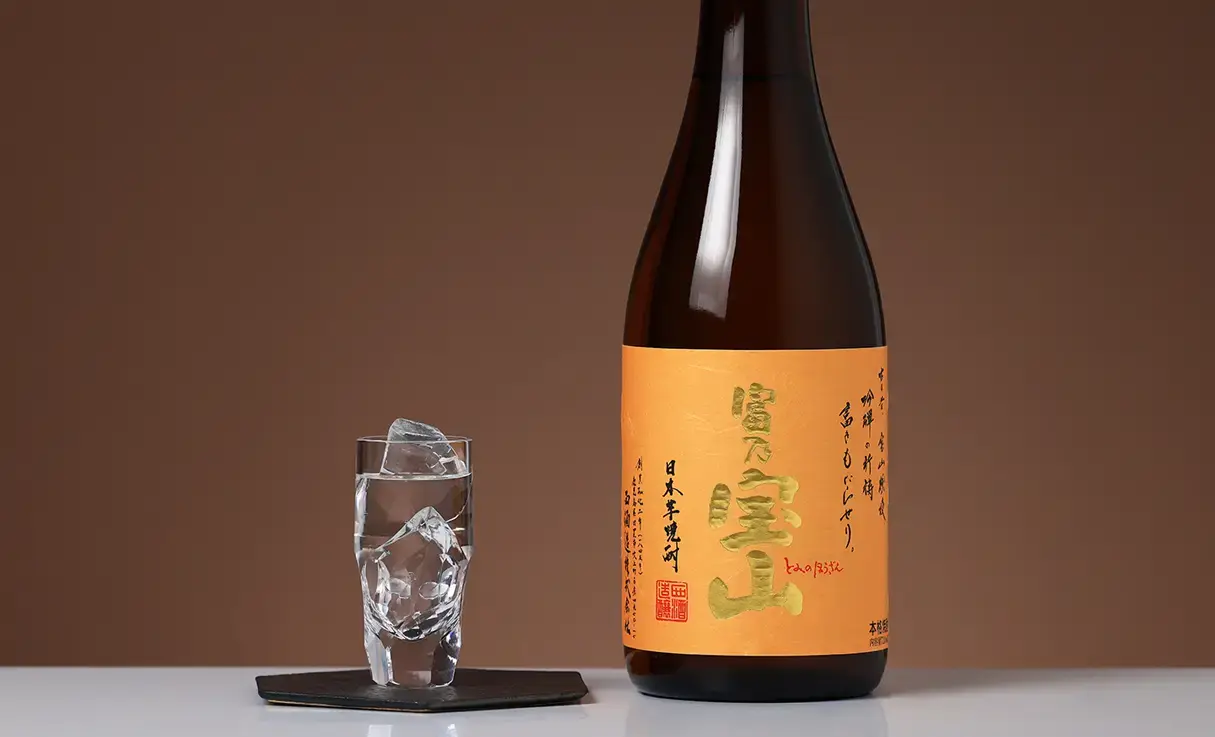
The label colors mirror those koji distinctions. That makes the familiar yellow a useful shopping clue, although the full written name remains the best way to identify the bottle.
Look for 富乃宝山
The large brush-written characters 富乃宝山 run down the yellow label. Do not confuse the expression with another bottle that shares 宝山. Confirm the strength and size as well as the family name.
The legend on the label
A Nishi Shuzo diary entry explains that the label refers to Hozan Kengyo, a legendary master of the Satsuma biwa. In the producer’s retelling, his prayers and music drove away a destructive serpent, allowing the land to become fertile rice fields.
This is presented as a local legend behind the brand identity, not as independently established history. It gives readers something to notice beyond the large product name: a small piece of the label carries a story about land, music and abundance.
What does it taste like?
A restaurant interview published by Nishi Shuzo describes a refreshing citrus-like aroma and clean mouthfeel, enjoyable over ice or with soda. Specialist retailer Sakaya Kagimoto also highlights citrus fragrance and a crisp impression.
These are attributed descriptions, not our own first-hand tasting notes. Citrus-like aroma does not mean that citrus peel is a listed ingredient in the bottle.
How to explore it
Try a small pour over ice, then add chilled soda for a longer drink. Those serves appear in the producer-published restaurant interview. Notice how aroma, dilution and food change your impression before adding a strong mixer.
For a broader comparison, see Kuro Kirishima and DAIYAME. The shared sweet potato base leaves plenty of room for different koji choices and aromatic directions.
Japan price example
On November 6, 2026, Sakaya Kagimoto listed 720 ml at ¥1,947 including tax. This is one retailer’s listing, not a confirmed manufacturer’s suggested price. Shipping, gift packaging and prices outside Japan can differ.
Sources
- Nishi Shuzo — koji types and label colors
- Nishi Shuzo — legend behind the label
- Nishi Shuzo — restaurant interview on aroma and serving
- Sakaya Kagimoto — bottle specification and price
Checked November 6, 2026. Featured artwork is an AI-generated imagined Kagoshima-inspired scene, not a product or distillery photograph.