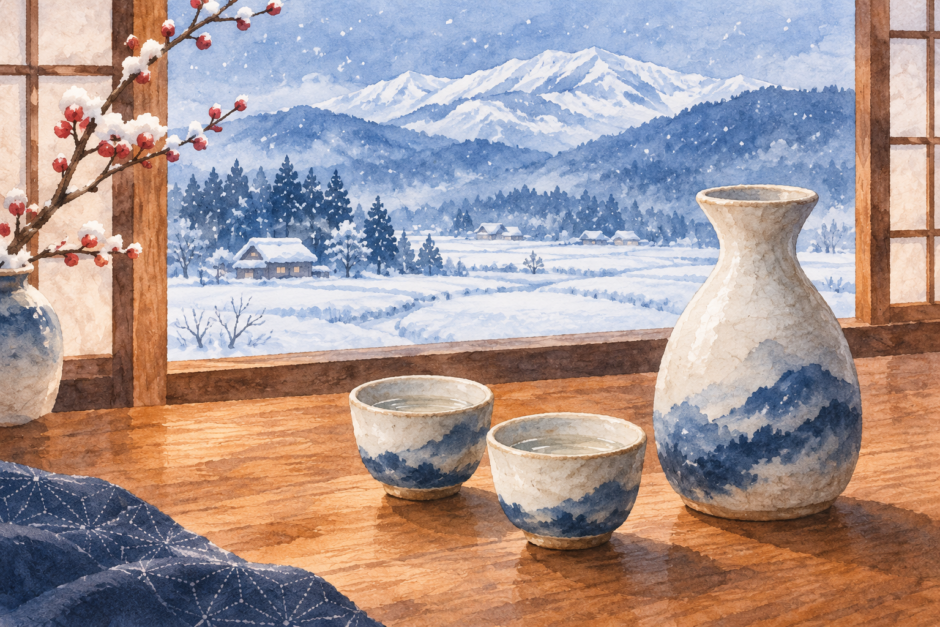

Hakkaisan (八海山) is a Japanese sake brand brewed by Hakkaisan Brewery in Minamiuonuma, Niigata. Its appeal starts with a simple idea: sake should have enough character to enjoy, while leaving room for the food beside it. Snow-country water, carefully made koji and a restrained brewing style are central to that approach.
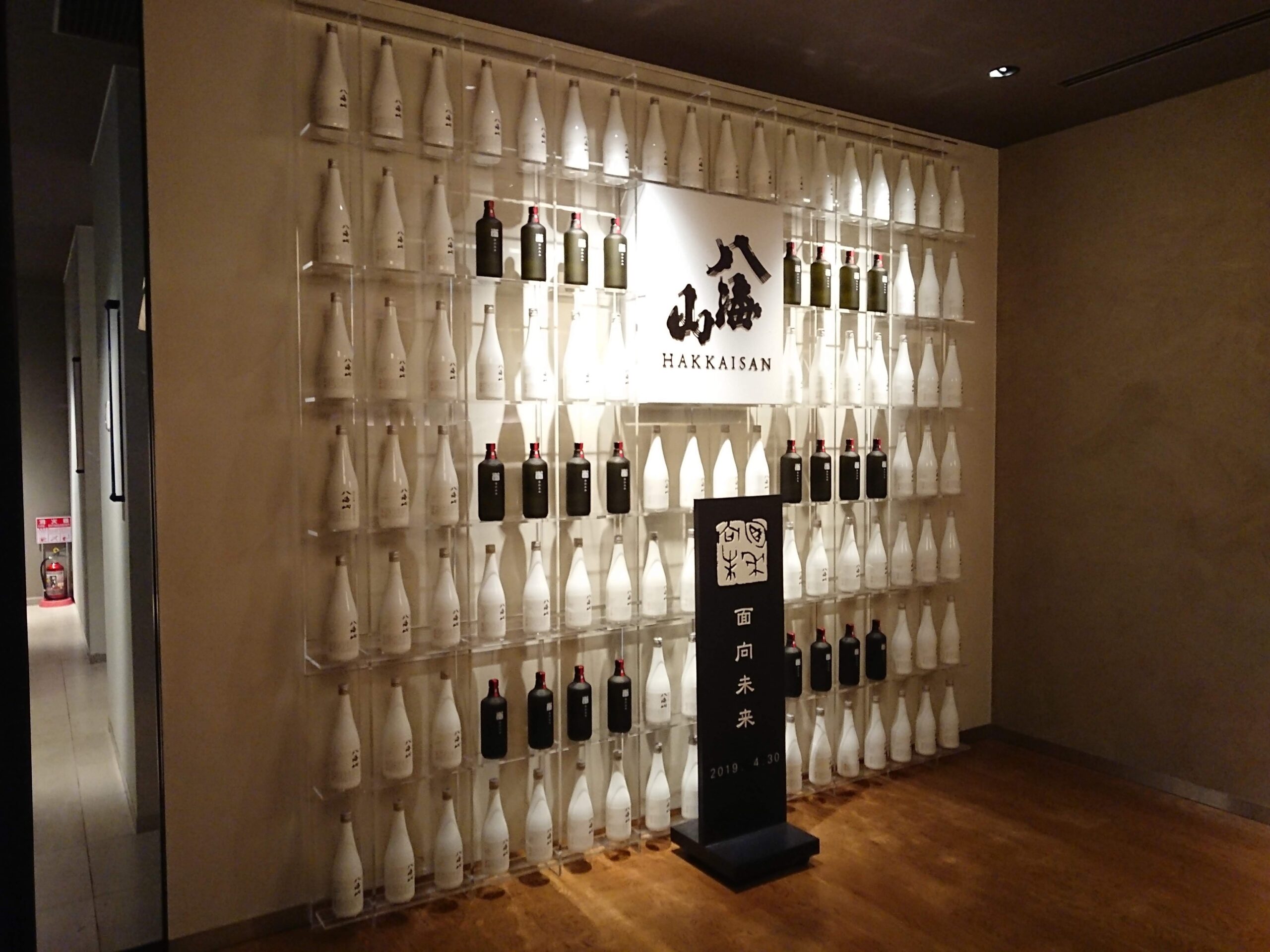
Hakkaisan at a glance
| Japanese name | 八海山 — Hakkaisan |
|---|---|
| Producer | Hakkaisan Brewery Co., Ltd. (八海醸造株式会社) |
| Origin | Minamiuonuma, Niigata Prefecture, Japan |
| Founded | 1922 |
| Focus of this guide | Tokubetsu Honjozo (特別本醸造), with an introduction to the wider range |
| What stands out | A food-focused brewing philosophy, very soft brewing water and a connection to Niigata’s snowy climate |
A sake shaped by snow country
Hakkaisan’s home is Minamiuonuma, an area of Niigata known for heavy winter snowfall. The brewery was established in 1922 and takes its name from Mount Hakkai. Its brewing water, known as Raiden-sama no Shimizu (雷電様の清水), is very soft water associated with the mountain.
The brewery describes its goal as a sake with depth and umami that does not overwhelm a meal. That is a more useful starting point than assuming every bottle will be intensely aromatic or rich. Hakkaisan is a range of products, and the exact expression on the label matters.
Start with Tokubetsu Honjozo (特別本醸造 八海山)
Tokubetsu Honjozo is a representative Hakkaisan bottling. The producer describes a gentle texture and a light, clean taste, and recommends it both chilled and warmed. Those descriptions come from the brewery rather than a tasting conducted for this article.
| Style | Tokubetsu Honjozo |
|---|---|
| Alcohol | 15.5% |
| Rice-polishing ratio | 55% remaining |
| Koji rice | Gohyakumangoku (五百万石) |
| Other brewing rice | Gohyakumangoku, Todorokiwase and others |
| Serving | Chilled or warmed, according to the producer |
A rice-polishing ratio of 55% means that 55% of the original grain remains after polishing; it does not mean 55% was removed. Honjozo is a sake category made with a limited addition of brewing alcohol. It remains a brewed sake, rather than a distilled drink such as shochu. The category alone does not tell you whether you will prefer it to a junmai sake.
For a simple way to explore this bottle, try a small serving chilled alongside a meal, then compare it gently warmed on another occasion. Sashimi, grilled white fish or a lightly seasoned vegetable dish are editorial pairing ideas, rather than verified brewery pairings or personal tasting claims. Follow the instructions on your bottle, particularly if you choose a different Hakkaisan expression.
Other bottles: check the full name
Tokubetsu Junmai: an export-market expression
Hakkaisan’s official English product page identifies its Tokubetsu Junmai as a product made for export outside Japan. It lists 15.5% alcohol and a rice-polishing ratio of 60%, and describes a mellow, balanced profile intended to suit a range of cuisines. If you encounter it overseas, do not assume it is the same product as Tokubetsu Honjozo or that you will find the identical bottle in a Japanese shop.
Snow-aged sake and the yukimuro
Another distinctive part of Hakkaisan’s range is sake matured in a yukimuro (雪室), a snow-cooled storage facility. Stored winter snow provides a naturally cold environment, around 3°C according to the brewery. Its three-year snow-aged expression illustrates how the region’s climate can become part of the production story, rather than simply a scenic backdrop.
Snow aging does not describe every Hakkaisan bottle. Look for the exact product name and aging period, and check its own specifications instead of applying the Tokubetsu Honjozo figures above to the whole range.
How to choose a Hakkaisan bottle
- For the representative style: consider Tokubetsu Honjozo, especially if you want to explore both chilled and warm serving.
- For a junmai expression overseas: check whether the bottle is the export-only Tokubetsu Junmai.
- For the snow-country story: explore a specifically labeled snow-aged expression and confirm its aging period.
When shopping, match both the brand name 八海山 and the product wording. Bottle size, market and expression all affect price, so a low or high price on its own is not a reliable comparison. This guide does not quote a Japanese retail price without a confirmed listing for the exact bottle.
Continue exploring Japanese sake
For another Niigata perspective, read our Jozen Mizunogotoshi guide. You can also explore Dassai and Shinkame to discover other approaches to Japanese sake.
Sources
- Hakkaisan — company profile
- Hakkaisan — brewing philosophy and water
- Hakkaisan — Tokubetsu Honjozo specifications
- Hakkaisan — export-only Tokubetsu Junmai
- Hakkaisan — snow-aged sake and yukimuro storage
- Takara Shuzo International — sake categories
Official information checked November 6, 2026. Specifications and availability may change; the producer notes that numerical values and rice varieties may vary. Flavor descriptions are attributed to the producer unless otherwise stated.

[…] with our guides to Hakkaisan (八海山), Dassai (獺祭) and Shinkame […]
[…] with our guides to Hakkaisan (八海山), Dassai (獺祭) and Shinkame […]