
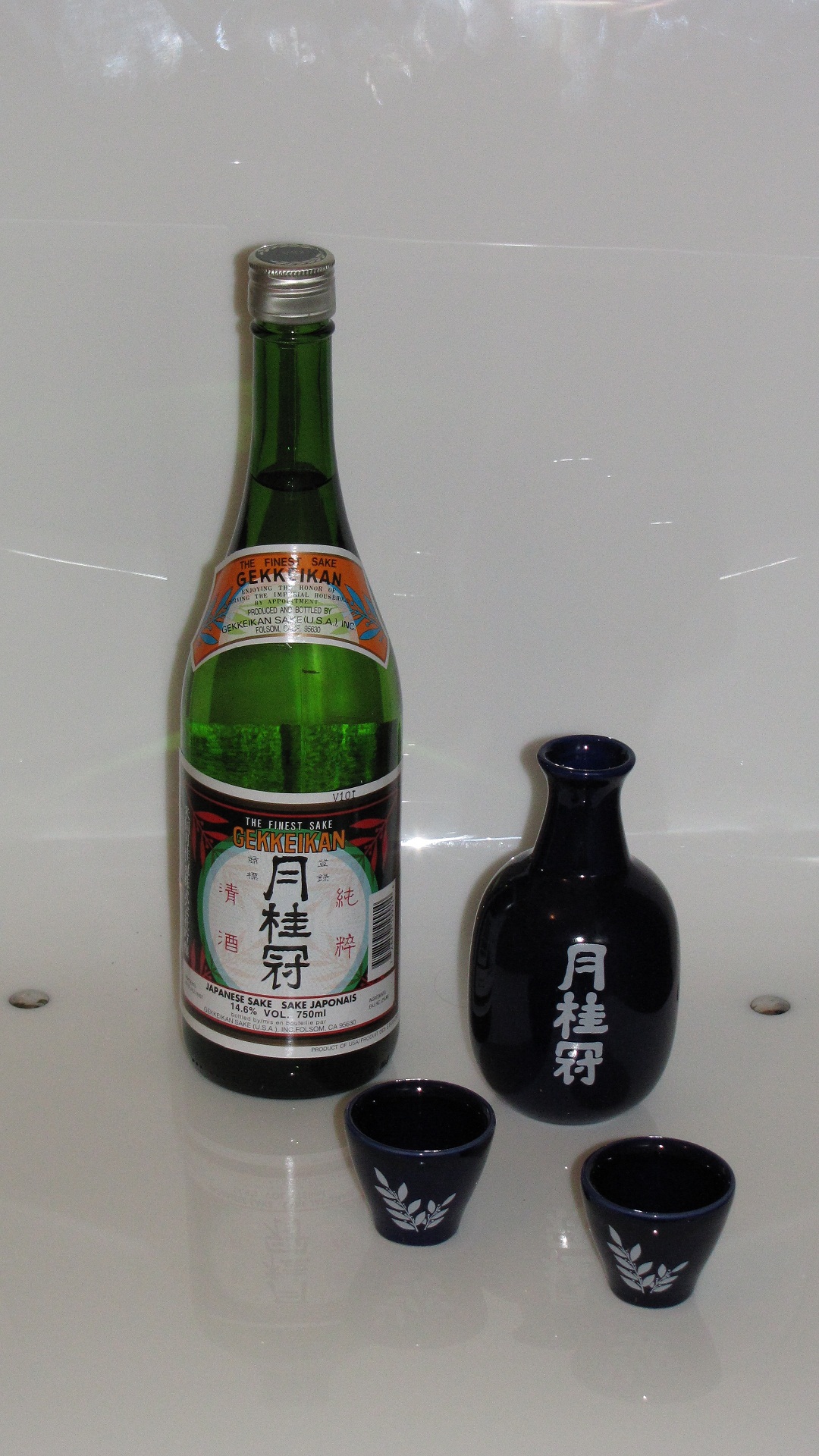
Gekkeikan (月桂冠) is a sake brand with roots in Fushimi, Kyoto, dating to 1637. For English-speaking shoppers, one detail is especially useful: the brand includes both sake brewed in Japan and sake made in California. A familiar name on the label does not, by itself, tell you where the contents were brewed.
Gekkeikan at a glance
| Japanese name | 月桂冠 — Gekkeikan |
|---|---|
| Japanese roots | Fushimi, Kyoto |
| Founded | 1637 |
| Name meaning | Crown of laurel |
| US brewing location | Folsom, California |
| Products explored here | Horin Junmai Daiginjo; Traditional Junmai |
From Fushimi to an international sake brand
Founder Jiemon Okura established his brewery in Fushimi in 1637. Gekkeikan’s history emphasizes the area’s water and its suitability for sake production. The Gekkeikan name was adopted in 1905, much later than the brewery’s founding.
The company also developed a scientific approach to brewing, establishing a sake research institute in 1909. Overseas brewing began in Folsom, California, in 1989. These developments help explain why the brand can represent both a Kyoto brewing heritage and an international production network.
Horin (鳳麟): brewed in Japan
Gekkeikan’s US site identifies Horin as a Japanese-made junmai daiginjo from Fushimi, Kyoto. It uses Yamada Nishiki and Gohyakumangoku rice, and the producer describes fruit-led aromas and a smooth, balanced character. It suggests a wine glass to appreciate the aroma.
| Style | Junmai Daiginjo |
|---|---|
| Origin | Fushimi, Kyoto, Japan |
| Alcohol | 16.4% |
| Rice-polishing ratio | 50% |
| Listed sizes | 720 ml and 300 ml |
| Serving | Chilled or at room temperature |
The rice-polishing ratio describes the portion of each grain that remains after polishing. It is a brewing specification, rather than a universal rating of taste or value.
Traditional: a California-brewed junmai
The same official site identifies Traditional as a US-made junmai using American ingredients and water. It lists 14.6% alcohol and a 70% rice-polishing ratio, with formats ranging from 750 ml to larger containers. This is a separate product from Horin.
The producer recommends chilled, room-temperature or warm serving. It suggests roasted meats, mushrooms and mature cheese among possible matches. Those serving options make Traditional a useful example of how one sake can be explored at different temperatures.
Japan-made or US-made: what to check
Read the country-of-origin statement first, then the product name and category. If your aim is to try a Kyoto-brewed bottle, choose a product explicitly identified as made in Japan, such as the Horin listing discussed here. If you want to explore Gekkeikan’s American brewing, Traditional is the relevant starting point.
Neither a Japanese brand name nor Japanese characters on a label are enough to identify a manufacturing location. This distinction is especially helpful when comparing an overseas supermarket bottle with a bottle bought during a trip to Japan.
Choosing your first bottle
For an aromatic junmai daiginjo to serve chilled with a meal, look into Horin and confirm the exact local listing. For a junmai that the producer recommends across several temperatures, explore Traditional. Choose by the experience you want, then compare bottle size and price within the same product.
Retail prices and local availability vary, so this guide does not present a single price as applying to the entire brand. Follow the label’s storage instructions and use the official product pages below to check specifications before buying.
Explore more Japanese sake
Continue with our guides to Hakkaisan (八海山), Dassai (獺祭) and Shinkame (神亀).
Sources and further reading
- Gekkeikan — history, Fushimi origins and California brewing
- Gekkeikan — Horin Junmai Daiginjo
- Gekkeikan — Traditional Junmai
- Gekkeikan — Japanese and California-made product ranges
Information checked November 6, 2026. Specifications and availability can change; check the label on the bottle you buy. Flavor descriptions are attributed to their sources, rather than based on a tasting conducted for this article.