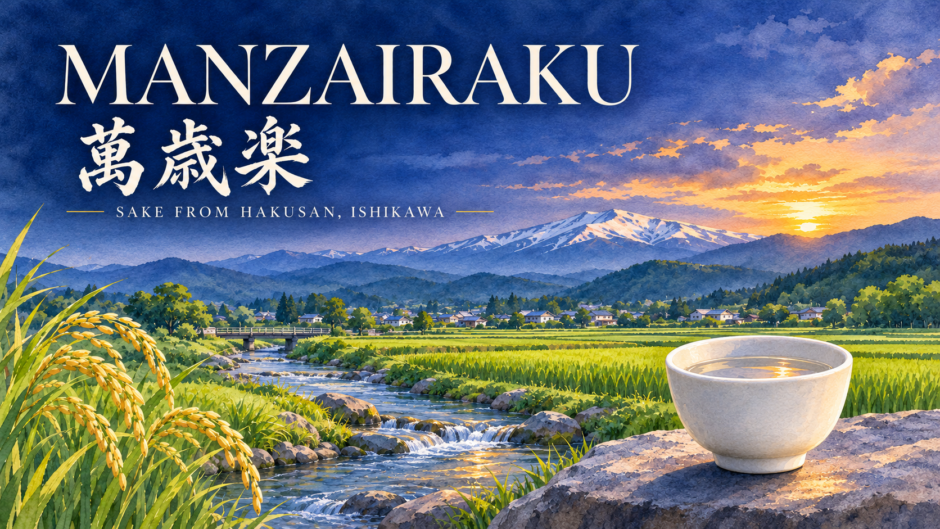

Manzairaku (萬歳楽) is a sake brand from Tsurugi, Hakusan City, Ishikawa. Produced by Kobori Shuzoten, it offers an introduction to local rice and food-focused sake at the foot of Mount Hakusan. This guide centers on Tsurugi (剱), the current dry junmai expression, and explains why older descriptions need care.
Manzairaku at a glance
| Japanese name | 萬歳楽 — Manzairaku |
|---|---|
| Producer | Kobori Shuzoten Co., Ltd. — 株式会社小堀酒造店 |
| Home | Tsurugi, Hakusan City, Ishikawa |
| Founding period listed | Kyoho era, 1716–1734 |
| Bottle explored here | Tsurugi — 剱 |
| Current style | Dry Junmai |
A local rice story
The brewery emphasizes rice as an important part of its identity. Its wider range uses varieties including Ishikawamon, Hyakumangoku no Shiro, Hokuriku No. 12 and Gohyakumangoku, alongside Yamada Nishiki from Hyogo. That variety matters: the same brand can express different rice choices in different products.
For Tsurugi, the official page specifies Gohyakumangoku from Hakusan City. It identifies the nearby Torigoe district as the growing area and highlights relationships with contracted farmers. The rice is therefore a concrete local connection, rather than simply a reference to Ishikawa on the front label.
Tsurugi: current specifications
The producer describes Tsurugi as a dry junmai with rice umami and a refreshing finish. It uses Kyokai 701 yeast, the non-foaming form associated with the No. 7 yeast family, to support a restrained, food-friendly profile.
| Product | Tsurugi — 剱 |
|---|---|
| Category | Junmai |
| Alcohol | 15% |
| Rice-polishing ratio | 70% |
| Rice | Gohyakumangoku, late-planted, from Hakusan City |
| Yeast listed | Kyokai 701 |
| Producer’s serving guidance | Chilled or warmed |
The 70% polishing ratio means 70% of each original grain remains. It is a production detail, rather than a score or a statement that one sake must be superior to another.
Why older Tsurugi listings can be confusing
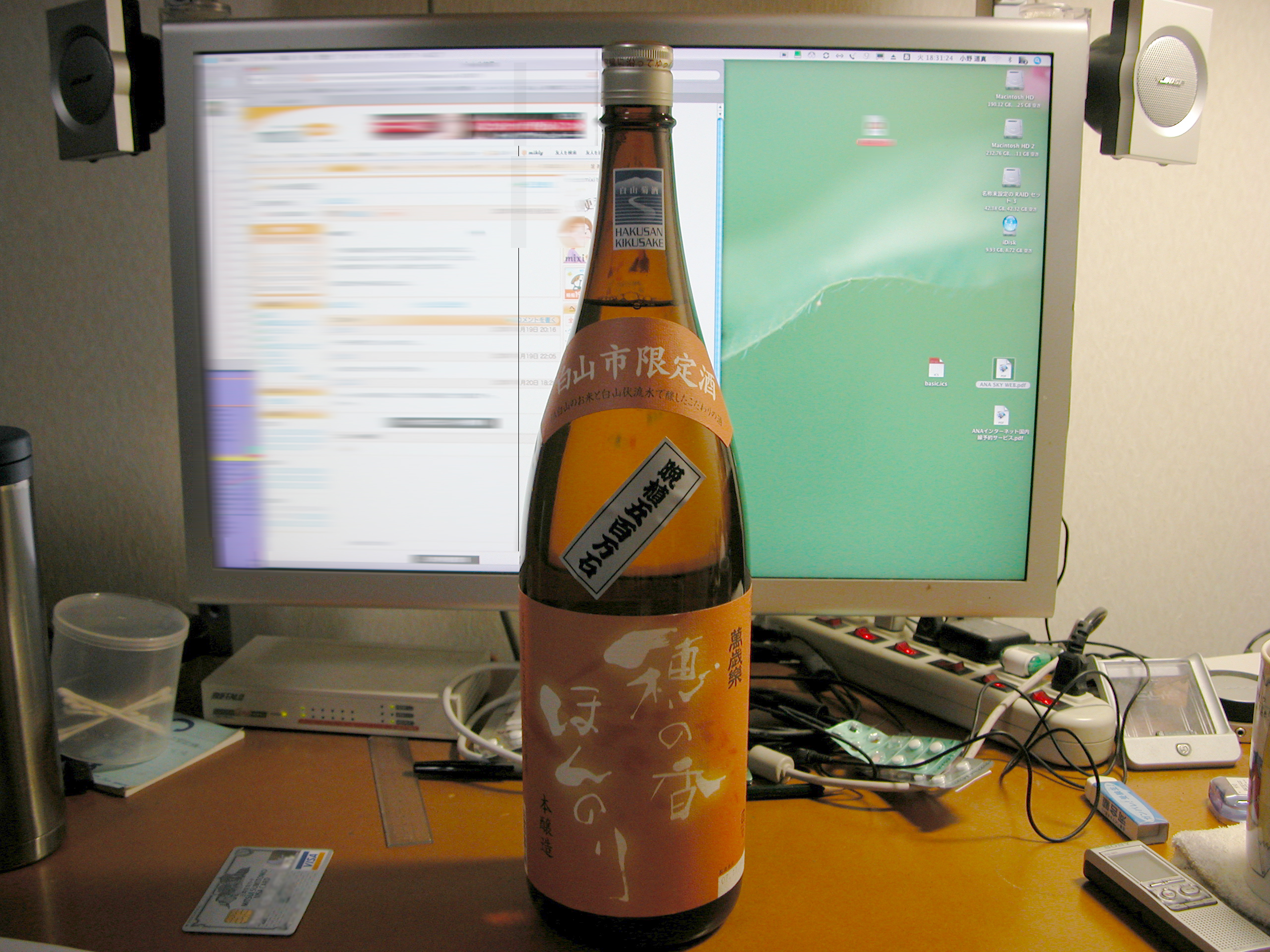
The brewery announced a renewed Manzairaku Junmai Karakuchi Tsurugi for release on April 8, 2024. That announcement describes low-temperature fermentation and a dry junmai style, with 15% alcohol and a 70% rice-polishing ratio.
When you find an older review or shop listing, check whether it refers to a previous product. Do not automatically transfer an old yamahai description to the current Tsurugi. Match the date, complete name and bottle label before relying on technical details.
Serving and food exploration
The producer says Tsurugi can be enjoyed chilled or warmed, and its renewal announcement notes that warming brings out rice umami. As an editorial comparison exercise, try small servings at two temperatures with the same meal and notice the difference in aroma and finish.
A plain dish followed by a more savory bite can make that comparison easier. Treat this as a way to discover your preferences, rather than a personal tasting report or an official pairing claim.
Choosing within the wider range
Manzairaku’s lineup includes other sake expressions and Kaga Umeshu, a plum liqueur. The shared brand name does not make the latter a sake. Read the category first, then the exact product name and volume.
For the bottle discussed here, look for 剱 and 純米. Confirm the current size and price with the seller rather than using a “from” price without a matched bottle volume. Follow the label’s storage instructions and compare like for like when shopping across markets.
Explore more Japanese sake
Continue with Masumi (真澄) and its No. 7 yeast heritage, Kikuhime (菊姫) and yamahai, or Shichiken (七賢) and sparkling sake.
Sources and further reading
- Manzairaku — company profile and founding period
- Manzairaku — rice and brewing approach
- Manzairaku — current Tsurugi specifications
- Manzairaku — April 2024 Tsurugi renewal announcement
Information checked November 6, 2026. Specifications, prices and availability can change. Tasting descriptions are attributed to the producer; this article does not report a first-hand tasting.