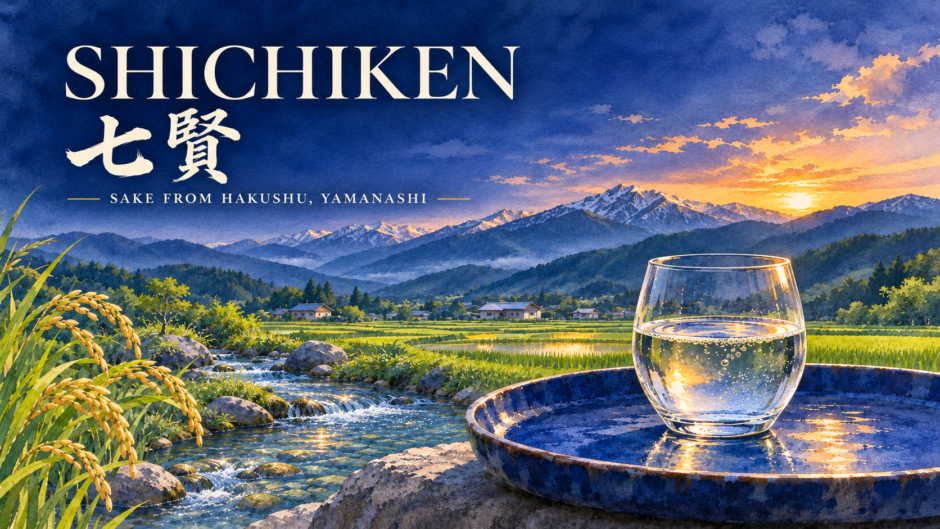

Shichiken (七賢) is a sake brand brewed by Yamanashi Meijo in Hakushu, Yamanashi. Its identity starts with water from the Southern Alps, but its range also points toward a different sake experience: fine bubbles produced through secondary fermentation in the bottle. This guide introduces the brewery and Yama no Kasumi (山ノ霞), one of its sparkling expressions.
Shichiken at a glance
| Japanese name | 七賢 — Shichiken |
|---|---|
| Producer | Yamanashi Meijo Co., Ltd. |
| Home | Daigahara, Hakushu, Hokuto City, Yamanashi |
| Founded | 1750 |
| A defining theme | Water associated with Mount Kaikoma in the Southern Alps |
| Product explored here | Yama no Kasumi — 山ノ霞, sparkling sake |
A brewery built around Hakushu’s water
According to the company’s history, founder Ihee Kitahara came from a sake-brewing family in Takato, Nagano. He was drawn to Hakushu’s water and began brewing in Daigahara on the Koshu Kaido in 1750.
The brand name came later. In 1835, the family received a pair of decorative transoms depicting the Seven Sages of the Bamboo Grove. That gift became the source of the name Shichiken. The story links the sake to the building and its history, rather than to a modern marketing invention.
The producer describes its water as originating in the Mount Kaikoma area and being filtered through granite. It also emphasizes locally produced rice grown with the same water source. These connections explain why Hakushu appears so prominently in the brand’s story.
Yama no Kasumi: a cloudy sparkling expression
Shichiken’s sparkling range uses secondary fermentation in the bottle to develop its bubbles. Yama no Kasumi combines those bubbles with a cloudy appearance and suspended rice particles. The producer connects the name and appearance to mist around the mountains.
| Product | Yama no Kasumi — 山ノ霞 |
|---|---|
| Type | Sparkling sake |
| Alcohol | 12% |
| Listed sizes | 720 ml and 360 ml |
| Producer’s serving guidance | Chilled |
| Appearance | Cloudy, with rice particles |
The official tasting description emphasizes a creamy texture, sweetness and umami, with tropical-fruit and dairy-like aroma associations. These are the producer’s sensory descriptions, rather than ingredients added to the sake.
How to serve it
Follow the chilled serving guidance and the opening instructions on your bottle. The producer suggests a flute and even lists Hawaiian pizza as a pairing idea. A relatively simple glass and dish can be a useful way to focus on the bubbles, texture and balance before trying more elaborate combinations.
As an editorial tasting exercise, compare a small pour with a still sake. Notice appearance first, then aroma, the sensation of bubbles and the finish. A sparkling sake is a different style to explore, rather than a substitute for every still sake you already enjoy.
Choosing within the Shichiken range
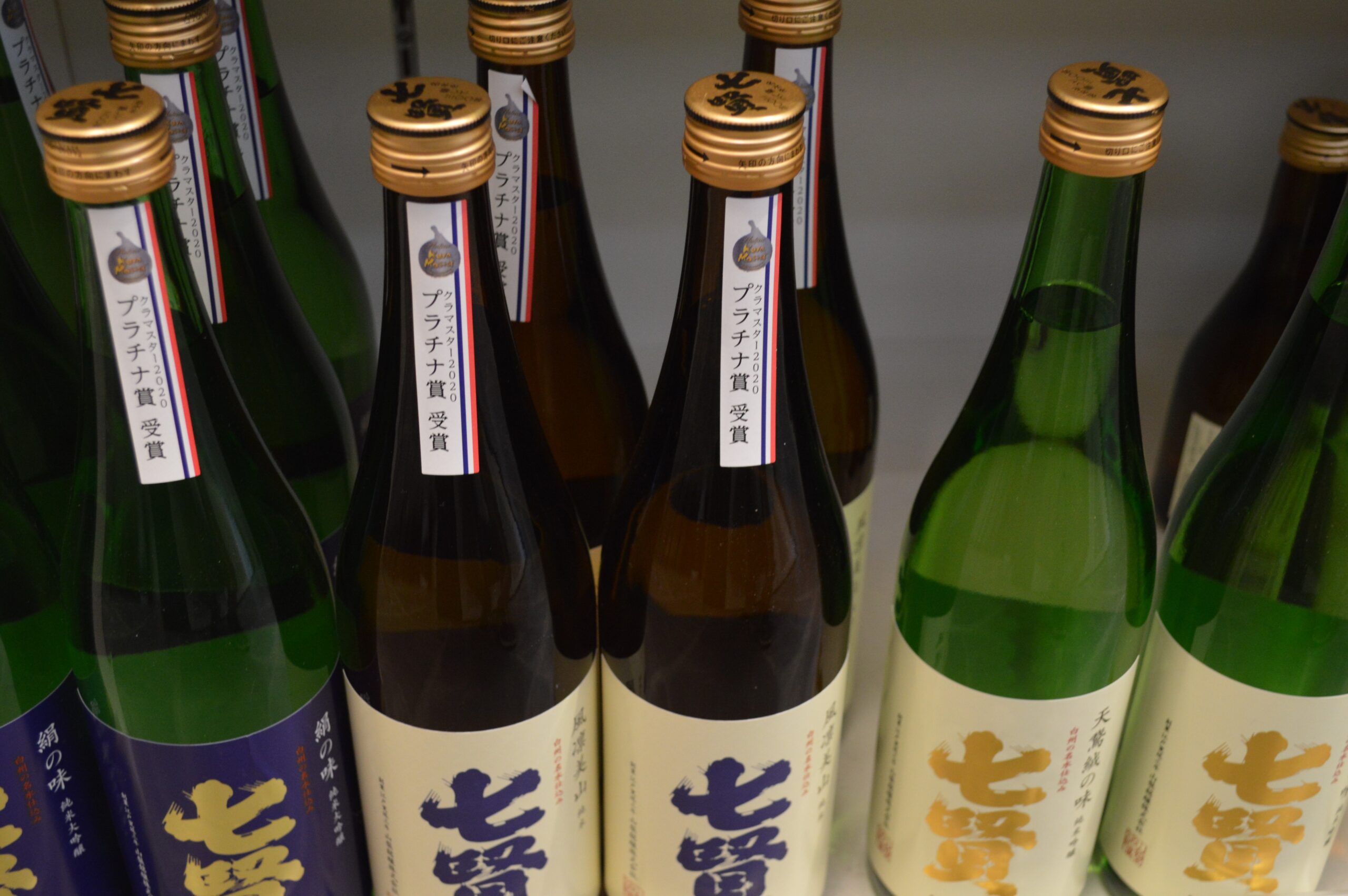
The brand also offers still sake and several other sparkling expressions. Do not apply Yama no Kasumi’s 12% alcohol or cloudy appearance to the entire range. Match the exact product name, volume and label before comparing prices.
If you want to explore the mountain-water story through a still sake, use the producer’s separate sake lineup. If bubbles are the attraction, start with the sparkling section and read each product’s own description. Availability and local prices should be checked with a retailer for the exact bottle.
Explore more Japanese sake
Compare these stories with Masumi (真澄) and its No. 7 yeast heritage, Kiku-Masamune (菊正宗) and cedar-scented taru sake, or Shinkame (神亀) and aged junmai.
Sources and further reading
- Shichiken — brand history and name
- Shichiken — Hakushu water and local rice
- Shichiken — sparkling range and secondary fermentation
- Shichiken — Yama no Kasumi specifications and serving
Information checked November 6, 2026. Product specifications and availability may change. Tasting descriptions are attributed to the producer rather than based on a tasting conducted for this article.