

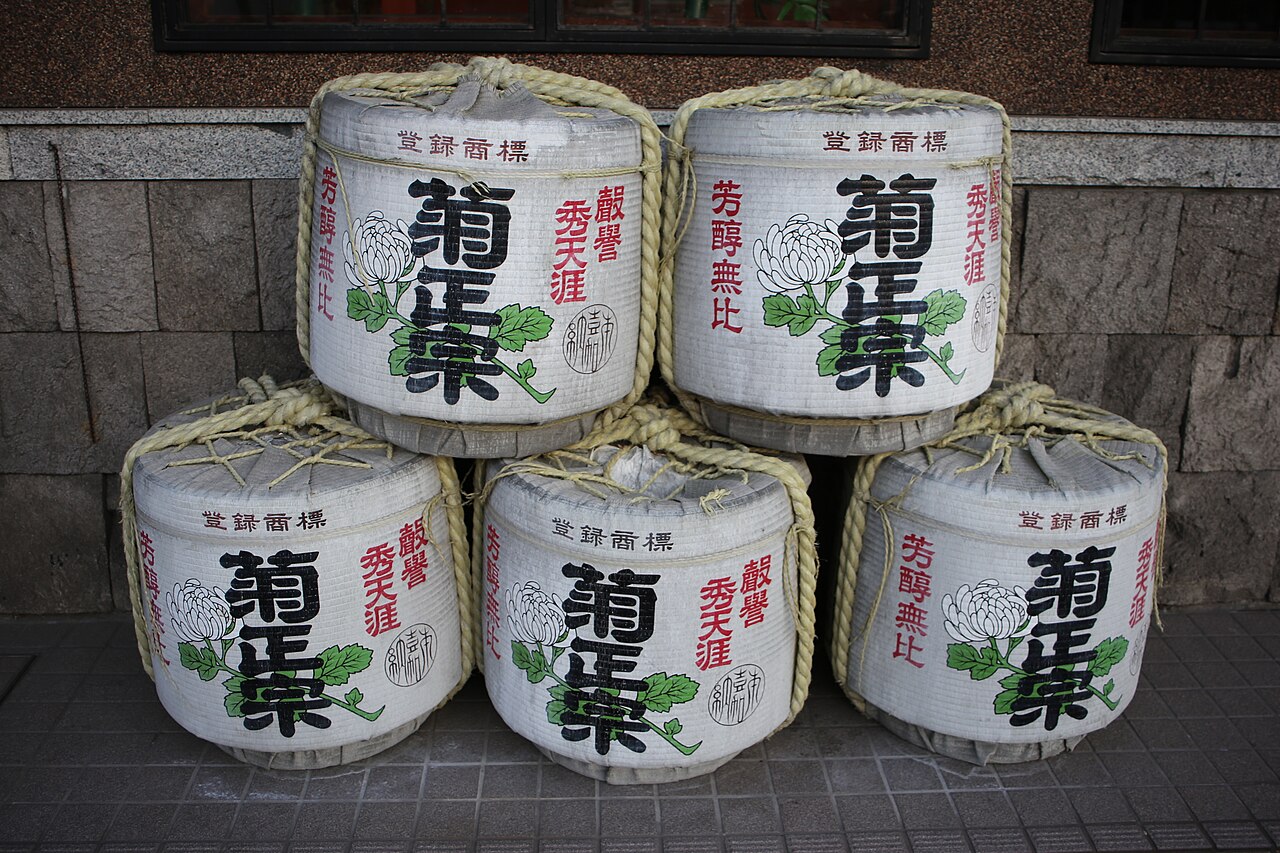
Kiku-Masamune (菊正宗), also written Kikumasamune, is a sake brand from Kobe’s Nada region. Its brewing history dates to 1659. One especially distinctive way to explore it is through taru sake (樽酒): sake that takes on the aroma of a wooden barrel before being bottled.
Kiku-Masamune at a glance
| Japanese name | 菊正宗 — Kiku-Masamune / Kikumasamune |
|---|---|
| Home | Nada, Kobe, Hyogo Prefecture |
| Brewing began | 1659 |
| Focus of this guide | Josen Junmai Taru Sake (上撰 純米樽酒) |
| Distinctive feature | Yoshino cedar-barrel aroma |
| A useful label word | 樽酒 — taru sake, or barrel sake |
A long-standing Nada brewery
The company’s official history begins with the Kano family brewing sake in Mikage, Kobe, in 1659. It later shipped sake to Edo and began exporting to Britain in 1877. These dates place Kiku-Masamune within the long trading history of Nada sake.
For today’s reader, however, the most interesting question is what distinguishes the contents of a particular bottle. Taru sake provides a clear answer: the aroma of cedar is part of the intended experience.
What makes taru sake different?
Kiku-Masamune explains that its taru sake is held in Yoshino cedar barrels before bottling. Its English introduction describes 72-liter barrels and emphasizes choosing the right stage of aroma development. The finished sake is sold in bottles as well as other formats; you do not need to buy a barrel to try the style.
This is a different idea from assuming a long aging period in oak, as you might with some wines or spirits. Here the useful question is how contact with Japanese cedar shapes the sake’s aroma. “Taru” describes that barrel connection, while “junmai” describes the ingredients category.
Start with Josen Junmai Taru Sake
The official Japanese shop lists Josen Junmai Taru Sake as a dry junmai brewed by the kimoto method, then stored in Yoshino cedar barrels. The producer describes a combination of rice-derived depth, a refreshing cedar scent and a crisp finish.
| Product | 上撰 純米樽酒 — Josen Junmai Taru Sake |
|---|---|
| Style | Junmai; taru sake |
| Brewing method listed | Kimoto |
| Alcohol | 15% |
| Rice-polishing ratio | 70% |
| Sake meter value | +5.0 |
| Bottle covered here | 720 ml |
Serving and food
The producer suggests chilled, room-temperature or gently warmed serving. Its Japanese product page mentions around 40°C for a warm pour, and recommends dishes including eel, mackerel with daikon and seared bonito. Start with a small pour at one temperature, then compare another to see how the cedar aroma changes.
As an editorial tasting exercise, smell the sake before taking a sip and then notice the aroma again after swallowing. That helps distinguish wood-related aroma from sweetness or acidity, which are separate parts of the experience.
Price and label checks
The official Kiku-Masamune shop listed the 720 ml bottle at ¥1,241 including Japanese tax when checked on November 6, 2026. Shipping and overseas prices can differ. Use the exact name 上撰 純米樽酒 when comparing prices: another taru product, pack size or sake category may have different specifications.
The brand makes many products, so avoid transferring the 15% alcohol and 70% polishing figures to everything labeled 菊正宗. Confirm the full product wording and follow its storage instructions.
Keep exploring Japanese sake
For more brewery stories, explore Hakutsuru (白鶴) in Nada, Gekkeikan (月桂冠) in Kyoto, and Denshu (田酒) in Aomori.
Sources and further reading
- Kiku-Masamune — official history
- Kiku-Masamune — cedar barrels and taru sake
- Kiku-Masamune official shop — Josen Junmai Taru Sake 720 ml, price and specifications
Information checked November 6, 2026. Specifications, prices and availability can change. Flavor descriptions are attributed to the producer rather than based on a tasting conducted for this article.