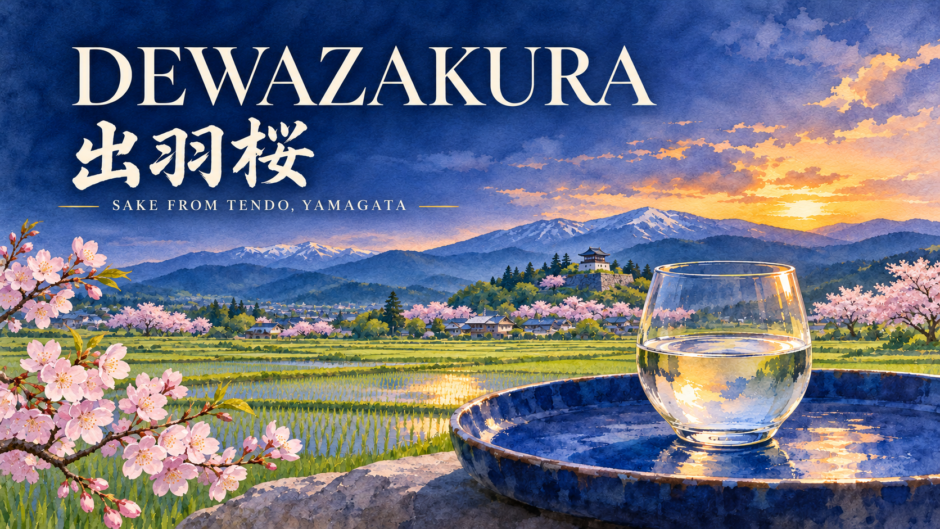

Dewazakura (出羽桜) is a sake brand from Tendo, Yamagata. Its Oka Ginjo (桜花吟醸酒) is a useful starting point for exploring aromatic sake: a product the brewery has made since 1980, with a story closely connected to the wider appreciation of ginjo.
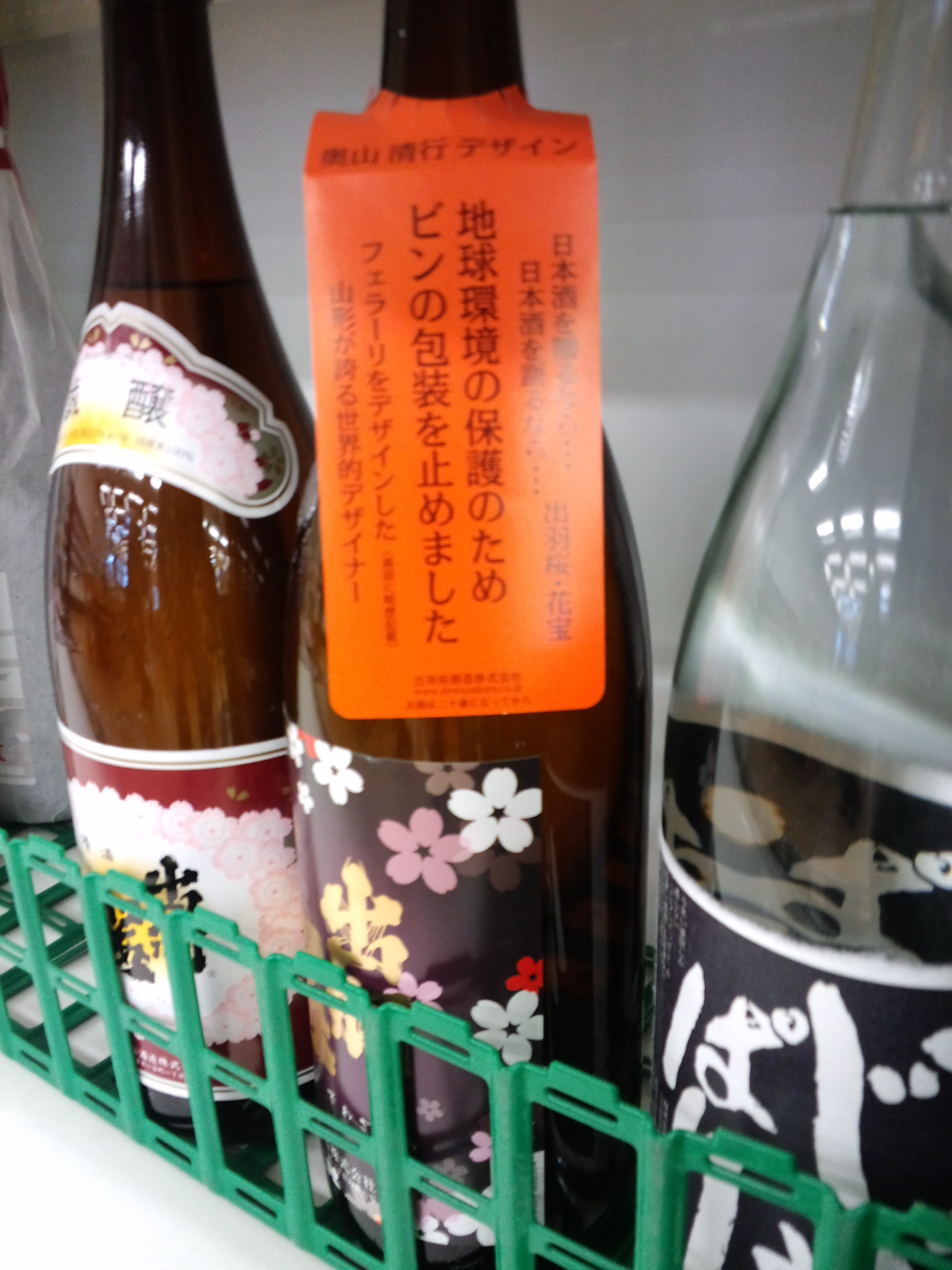
Dewazakura at a glance
| Japanese name | 出羽桜 — Dewazakura |
|---|---|
| Producer | Dewazakura Sake Brewery Co., Ltd. |
| Home | Tendo, Yamagata Prefecture |
| Brewery founded | 1892 |
| Bottle explored here | Oka Ginjo — 桜花吟醸酒 |
| Oka launched | 1980 |
Why Oka matters
The Japan Sake and Shochu Makers Association identifies Dewazakura as a brewery that helped bring ginjo sake to a wider market. That is useful context for Oka: its significance is not only a set of technical specifications, but its role as an accessible introduction to the style.
Ginjo is a sake category associated with particular brewing practices and rice polishing. It does not mean that every ginjo will share the same aroma, sweetness or texture. Oka is one expression to explore, rather than a template for all Japanese sake.
Oka Ginjo specifications
The producer describes the standard Oka as fruity and refreshing. Its official page lists a 50% rice-polishing ratio and 15% alcohol, with year-round release.
| Category | Ginjo |
|---|---|
| Rice | Japanese-grown rice |
| Rice-polishing ratio | 50% remaining |
| Alcohol | 15% |
| Listed formats | 300 ml, 720 ml and 1.8 L |
At 50% remaining, half the original grain remains after polishing. This is a production specification, not a score. The product is labeled ginjo; do not silently add “junmai” when translating or comparing it with a junmai ginjo from another brewery.
Serving the standard bottle
Dewazakura’s serving chart favors chilled temperatures of 5–10°C or lightly chilled temperatures of 10–15°C. As an editorial tasting approach, pour a small amount into a glass with room to smell the aroma, then notice how the impression develops as it warms slightly.
Try the first sip before eating, then another alongside a simple dish. This lets you separate the sake’s aroma from the food’s seasoning. It is an exploration method, rather than a reported tasting result or a brewery-approved pairing.
Oka Hon-nama is a different purchase
The brewery also makes Oka Ginjo Hon-nama (桜花吟醸酒 本生), bottled without heat treatment. Its official page lists the same 50% polishing ratio and 15% alcohol, but explicitly requires refrigeration.
The extra 本生 wording matters. Shared specifications do not make the handling requirements identical. Confirm the exact version before buying, particularly if a retailer abbreviates the English name to “Dewazakura Oka.”
Price guide in Japan
The brewery lists standard Oka Ginjo at ¥1,771 for 720 ml, including Japanese tax. This is the official listed price checked November 6, 2026; retailer prices, shipping and overseas prices can differ.
The producer lists the 720 ml Hon-nama separately at ¥1,892 including tax on the same check date. Compare like for like: bottle size and the presence of 本生 can explain why two listings carrying the Oka name differ.
Explore more Japanese sake
Continue with Masumi (真澄) and its No. 7 yeast heritage, Kikuhime (菊姫) and yamahai, or Shichiken (七賢) and sparkling sake.
Sources and further reading
- Dewazakura — Oka Ginjo specifications, serving and prices
- Dewazakura — Oka Ginjo Hon-nama and refrigeration
- Japan Sake and Shochu Makers Association — brewery background
Information checked November 6, 2026. Specifications, prices and availability can change. Tasting descriptions are attributed to the producer; this article does not report a first-hand tasting.