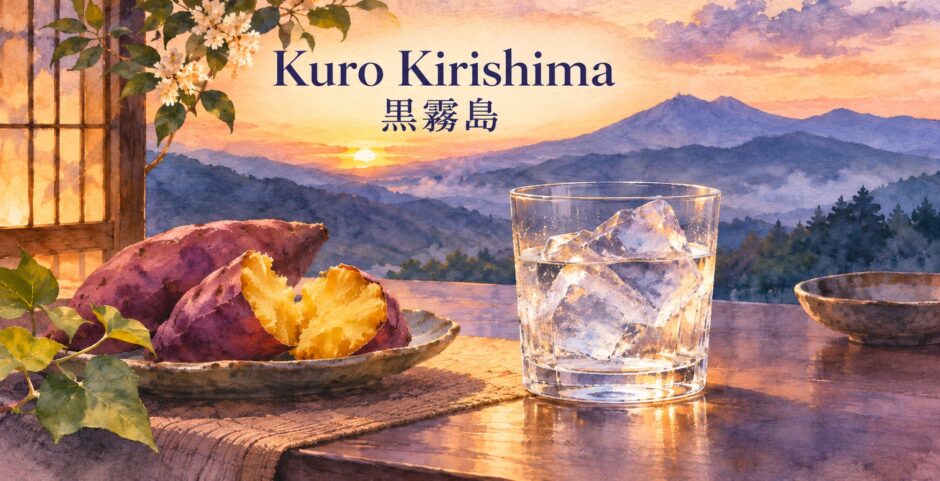

Kuro Kirishima(黒霧島) is a sweet potato shochu from Kirishima Shuzo in Miyakonojo, Miyazaki, on Japan’s southern island of Kyushu. The producer describes its signature balance as rounded sweetness followed by a crisp finish. It is a useful bottle for discovering that shochu can express its ingredients while still working comfortably alongside a meal.
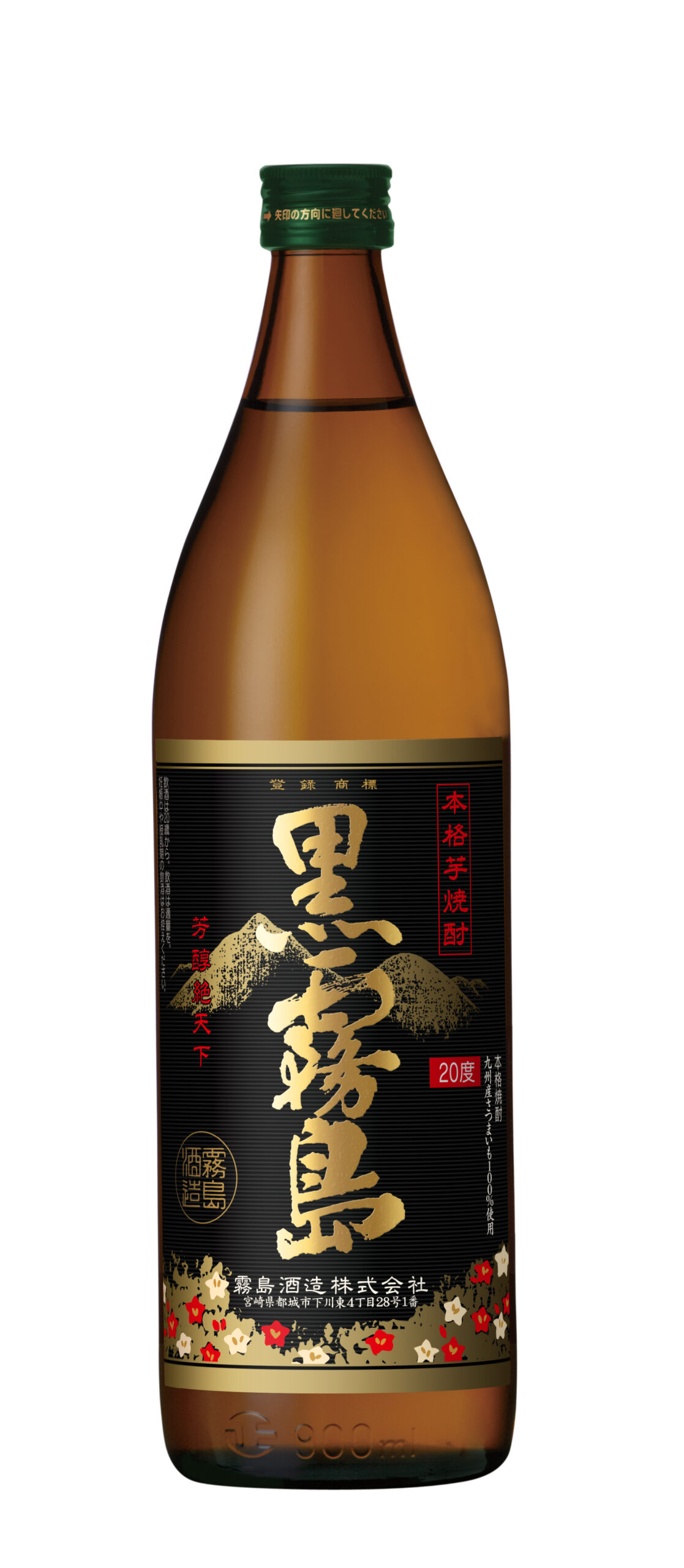
Kuro Kirishima at a glance
- Japanese name: 黒霧島
- Producer: Kirishima Shuzo Co., Ltd.(霧島酒造株式会社)
- Home: Miyakonojo, Miyazaki Prefecture, Japan
- Type: Honkaku imo shochu—sweet potato shochu
- Ingredients: Kyushu-grown sweet potatoes and rice koji made with Japanese rice
- Koji: Black koji
- Alcohol: 20% and 25% ABV versions in the Japanese lineup
What makes it different from sake?
Despite appearing beside sake on some menus, Kuro Kirishima is a distilled spirit. Sweet potatoes are central to its identity, while rice koji supports fermentation. It is not a rice sake with sweet potato flavor added.
For a first encounter, read the category as well as the brand: imo means sweet potato, while honkaku shochu identifies a traditional style of Japanese spirit. These terms help distinguish the bottle from barley shochu or brewed Japanese sake.
A modern brand with older roots
Kirishima’s business history begins in Miyakonojo in 1916, when founder Kichisuke Enatsu began making shochu. The company connects Kuro Kirishima’s black-koji identity to that original production tradition. The Kuro Kirishima brand itself came much later, launching in 1998; the age of the company and the age of this particular product should not be confused.
That combination is part of its appeal: the bottle introduces a long-established regional craft through a modern, recognizable brand. Miyazaki is an important part of the story, rather than simply a location printed on the back label.
What does Kuro Kirishima taste like?
According to Kirishima Shuzo, the defining contrast is a rounded, rich sweetness and a clean, decisive finish. Its brand presentation also emphasizes sweet potato aroma and body. Think of those descriptions as the maker’s intended style, rather than a promise that every drinker will find identical flavors.
We have not added an invented tasting score or presented these notes as a first-hand tasting. Serving temperature, dilution and the food beside the glass can all influence the experience. For a useful comparison, try the same bottle over ice and with soda, keeping the initial shochu pour small and consistent.
How should you drink it?
The producer’s brand site specifically recommends on the rocks to explore its rounded character, or a soda highball for a refreshing finish. The latter is promoted under the Japanese name “Kurokkiri Ball.”
- On the rocks: Add ice to a glass, pour a modest amount of shochu, and allow a little time for chilling and dilution.
- With soda: Add chilled soda water to shochu over ice and adjust the balance to your preference.
- With food: Use the producer’s broad pairing approach as a starting point: its suggestions span Japanese, Western, Chinese and other cuisines.
Neither serving needs to be treated as a formal tasting exercise. A meal and a simple glass can be enough to begin understanding the bottle.
20% or 25%: which bottle are you looking at?
Both strengths appear in the official Japanese range. The photograph above shows an older 20% ABV, 900 ml bottle. When shopping, confirm the alcohol percentage and volume instead of relying on a familiar label alone.
Also check whether the listing is for standard Kuro Kirishima or Kuro Kirishima EX, a separately named product. This guide covers the standard expression. Bottle, carton and market-specific packaging can make otherwise similar search results look quite different.
Price guide in Japan
The producer’s Japanese product page listed the following suggested retail prices when checked on November 6, 2026. All figures below exclude Japanese consumption tax.
| Standard Kuro Kirishima | Volume | Suggested price, excluding tax |
|---|---|---|
| 20% ABV, glass bottle | 900 ml | ¥950 |
| 25% ABV, glass bottle | 900 ml | ¥1,083 |
| 25% ABV, glass bottle | 1,800 ml | ¥2,021 |
These are manufacturer suggestions, not guaranteed shop prices. Retail discounts, tax, shipping and overseas distribution affect what you actually pay. Compare the same strength, volume and packaging when checking value.
Where to start
For an introduction, look for standard Kuro Kirishima and confirm which strength is available locally. Try it over ice first, then with soda, and notice how the sweet potato character sits alongside the finish. This gives you a practical reference point before exploring barley or rice shochu.
Sources
- Kirishima Shuzo — official product specifications, lineup and Japanese suggested prices
- Kirishima Shuzo — Kuro Kirishima brand and serving guidance
- Kirishima Shuzo — company history
- Kirishima Shuzo — 2018 announcement confirming Kuro Kirishima’s 1998 launch
- Kirishima Shuzo — company and production locations
- Wikimedia Commons — photograph, author and license
Product information and prices checked November 6, 2026. This independent introduction is not a sponsored tasting or a producer endorsement.

[…] Maou with Kuro Kirishima(黒霧島) to explore two sweet potato expressions, or with iichiko(いいちこ) for a barley-based […]
[…] makes DAIYAME a useful comparison with Kuro Kirishima or Maou. All are sweet potato shochu, yet the maker’s intended balance and recommended serve […]
[…] the same modest pour with water and over ice. Notice how the balance changes, then compare it with Kuro Kirishima or DAIYAME. All use sweet potato, but brand identity, aroma and the way you serve them need not be […]
[…] a broader comparison, see Kuro Kirishima and DAIYAME. The shared sweet potato base leaves plenty of room for different koji choices and […]