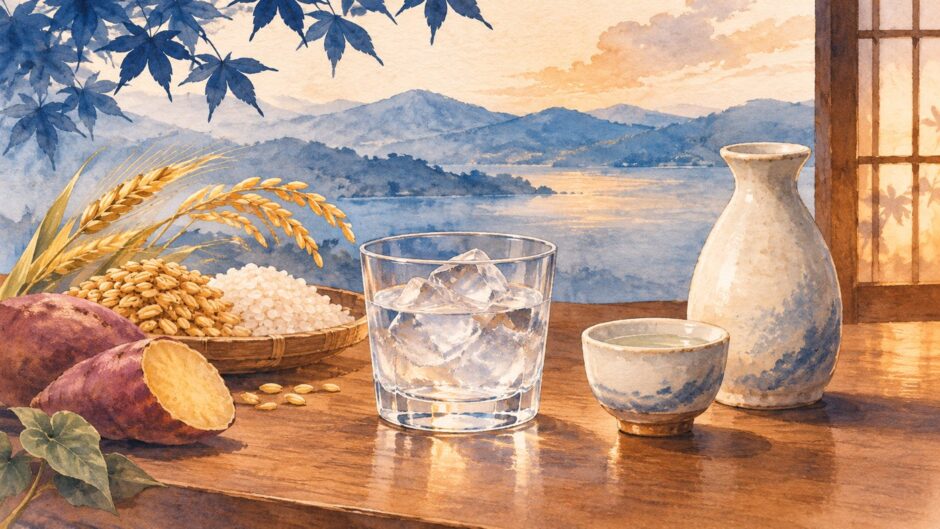

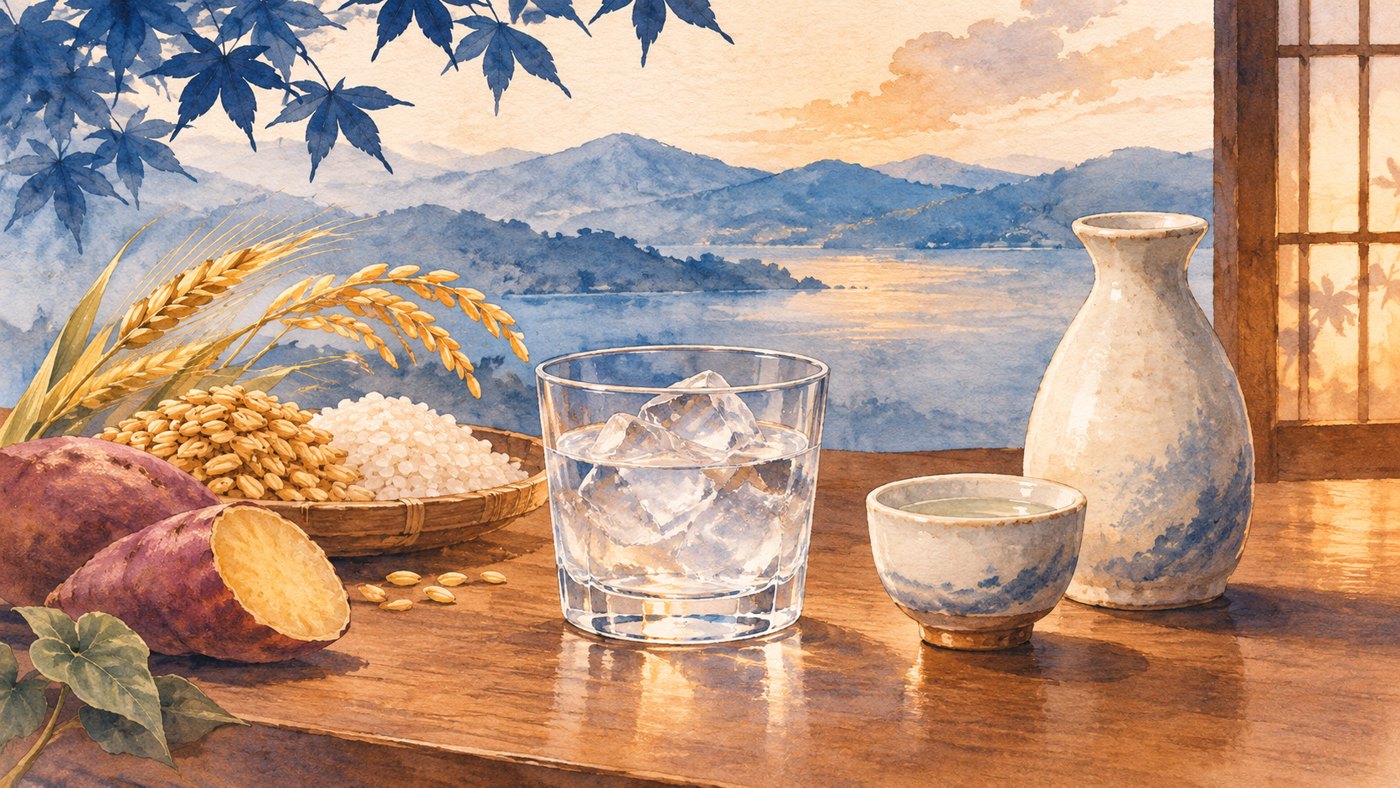
Shochu (焼酎) is a Japanese distilled spirit; sake (日本酒, nihonshu) is a brewed rice drink. That extra step—distillation—is the clearest way to tell them apart. Shochu can begin with sweet potatoes, barley, rice or other ingredients, so its character extends well beyond the rice-based flavors associated with sake.
If you have seen both names on a Japanese restaurant menu, this guide explains what to expect in the glass, how their strengths compare, and which serving style to try first.
Shochu vs. sake at a glance
| Feature | Shochu(焼酎) | Sake / Nihonshu(日本酒) |
|---|---|---|
| Drink type | Distilled spirit | Brewed rice drink |
| Ingredients | Sweet potatoes, barley, rice and other bases; koji is central to honkaku shochu | Rice, water, koji and yeast; some styles also use brewing alcohol |
| Typical bottle strength | Often 25% ABV; many bottles fall between 20% and 35% | Often around 15% ABV; varies by product |
| Flavor range | From light and delicate to roasted, earthy or fruit-scented | From light and crisp to fruity, savory or rich |
| Common ways to serve | Neat, over ice, or mixed with water, hot water or soda | Chilled, at room temperature or warmed, depending on the bottle |
These are general patterns, not fixed specifications. Check the individual bottle. The shochu discussion below focuses mainly on honkaku shochu.
What is shochu?
Shochu is a family of Japanese spirits. Honkaku shochu(本格焼酎) is pot-distilled and preserves character from its ingredients and fermentation. Ko-rui shochu(甲類焼酎) is column-distilled and generally has a more neutral profile. This distinction matters: a flavorful sweet potato honkaku shochu and a neutral mixing spirit can both carry the name shochu.
The drink has particularly strong roots in southern Japan. Rather than treating the whole category as one flavor, start by reading the base ingredient on the label.
What is sake?
In English, “sake” usually means the Japanese rice drink called nihonshu. In Japanese, sake can also mean alcoholic drinks generally. Using “nihonshu” helps clarify what you mean when ordering in Japan.
Sake is brewed: koji supplies enzymes that turn rice starch into sugars, and yeast produces alcohol through fermentation. The fermented mash is separated to obtain the drink; it is not distilled. Junmai styles use no added brewing alcohol, while other sake categories may include it.
How are shochu and sake made differently?
Both traditions draw on fermentation, but shochu goes further. In a typical honkaku shochu process, koji and yeast help create a fermented mash using the chosen base ingredients. That mash is then distilled, concentrating alcohol and selecting aroma compounds. The spirit may subsequently be rested or matured and adjusted with water before bottling.
Calling shochu “strong sake” therefore misses the point. Most shochu is not made by simply taking a finished bottle of nihonshu and distilling it. Rice is only one possible base, and the fermentation and distillation choices help create distinct styles.
Production references: JSS: How Is Shochu Made? and JNTO: Sake 101.
What does shochu taste like?
The ingredient name is a useful first clue, although the still, koji, yeast and maturation can change the result considerably.
- Imo(芋), sweet potato: Often rounded and aromatic. Some expressions feel earthy, while others reveal floral or tropical-fruit notes.
- Mugi(麦), barley: Can range from light and refreshing to roasted and nutty.
- Kome(米), rice: May be mellow and delicate, with some expressions showing fruity aromas reminiscent of ginjo sake.
- Kokuto(黒糖), brown sugar: Can carry a sweet-smelling aroma without tasting like a sugary liqueur.
These descriptions summarize the Japan Sake and Shochu Makers Association’s flavor guide; they are style pointers, rather than our own tasting notes for a particular bottle.
Is shochu stronger than sake?
Usually, in the bottle. A 25% ABV shochu contains more alcohol per equal volume than a sake at 15% ABV. However, the strength of a served drink depends on dilution and the amount poured.
For example, mixing 60 ml of 25% shochu with 60 ml of water produces approximately 120 ml at 12.5% ABV, before allowing for ice melt. It still contains the same 15 ml of pure alcohol as the original shochu pour. Adding water changes concentration; it does not remove alcohol.
How do you drink shochu?
A small neat taste can reveal a bottle’s character, followed by a little water to explore how it changes. Other common approaches include:
- On the rocks: Ice chills the spirit and gradually dilutes it.
- Mizuwari(水割り): Mix with still water, adjusting the balance to your preference.
- Oyuwari(お湯割り): Mix with hot water for a warm serving.
- Soda-wari(ソーダ割り): Add soda water for a longer, sparkling drink.
There is no single ratio that suits every bottle. Begin with a modest pour and follow the producer’s serving advice where available. Shochu can accompany a meal as well as appear in cocktails.
Is awamori the same as shochu?
Awamori(泡盛)belongs to the wider Japanese distilled-spirit family and has its own Okinawan identity. Its characteristic production uses black koji and indica rice. It deserves its own introduction rather than being treated as another name for every rice shochu.
Which should you try first?
Choose according to the experience you want. If you want to explore rice brewing, sake is a natural starting point. If you are curious about how ingredients express themselves through a distilled spirit, compare honkaku shochu made from barley, rice or sweet potato. Ask for the ingredient and recommended serving style, rather than choosing solely by the brand name.
For a sake example, see our Dassai(獺祭)guide. It introduces a specific junmai daiginjo lineup, which offers a useful contrast with the much broader ingredient choices in shochu.
Sources and further reading
- JSS — What Is Shochu? (categories and awamori)
- JSS — How Is Shochu Made? (fermentation and distillation)
- JSS — Frequently Asked Questions (bottle strength, koji and serving)
- JSS — What Does Shochu Taste Like? (ingredient-based flavor guidance)
- JETRO — Shochu 101 (ingredients and flavor diversity)
- JNTO — Sake 101 (sake terminology, production and serving)
Sources checked November 6, 2026. This is a category introduction; individual products vary.